

Choosing the Best Trading Brokers in South Africa
Looking for the best trading brokers in South Africa? Learn how to compare fees, platforms, regulation, and support 📈 Start trading with confidence safely today!
Edited By
Emily Carter
Derivatives trading in South Africa operates under a clear regulatory framework aimed at protecting market integrity and investor interests. Unlike the untamed wild, this space is overseen by formal authorities ensuring that all players stick to the rules.
The Financial Sector Conduct Authority (FSCA) serves as the primary watchdog. They oversee the conduct of financial institutions involved in derivatives, making sure they treat clients fairly and follow prescribed market practices. Alongside the FSCA, the Johannesburg Stock Exchange (JSE) plays an important part in regulating derivatives traded on its platform, including futures and options.
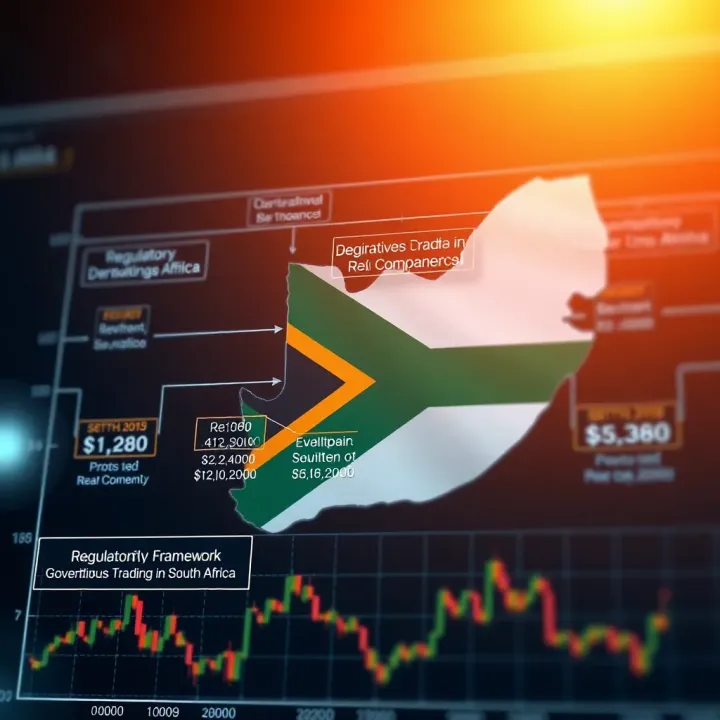
Key legislation includes the Financial Markets Act 19 of 2012 and the Financial Advisory and Intermediary Services Act. These set the ground rules for how derivatives should be traded, reported, and cleared. For example, a broker offering derivative contracts must be authorised and adhere to capital adequacy and risk management standards.
Derivatives covered under this framework range from commodity futures to equity options and interest rate swaps. These instruments serve multiple purposes—from hedging against fluctuating commodity prices, often relevant to South Africa’s mining sector, to speculating on market movements.
Traders and investors must navigate not only the market risk but also compliance requirements, which include disclosure obligations and adherence to position limits.
Market participants are required to register with the FSCA, depending on their role. This step helps ensure transparency and enforces accountability. Non-compliance can lead to penalties, suspension, or removal from trading venues.
In practice, this means if you're an institution using derivatives to hedge exposure or a retail trader dabbling in options through a licensed broker, you're operating within a system designed to reduce systemic risk while offering safeguards.
This regulatory regime contributes to maintaining confidence among local and international investors. It also allows the South African derivatives market to function with oversight comparable to other established global financial centres, fostering trust and fair competition.
Understanding who governs derivatives in South Africa, what laws apply, and what rules you must comply with remains essential for anyone active in or entering this market.
Understanding derivatives is key for anyone navigating South Africa's active financial markets. These financial instruments allow traders, investors, and institutions to manage risk, speculate, or gain exposure without owning the underlying asset directly. The market relies on derivatives like futures, options, swaps, and forwards to maintain liquidity and enable smoother price discovery.
Futures contracts are agreements to buy or sell an asset at a predetermined price on a future date. For South African farmers, for instance, using maize futures on the Johannesburg Stock Exchange (JSE) can lock in prices ahead of harvest, helping protect against market swings. These contracts are standardised and traded on exchanges, making them more transparent and liquid.
Options give the buyer the right, but not the obligation, to buy or sell an asset at a set price before expiry. Investors might use options to hedge a portfolio in volatile times or to speculate on movements of local shares like those of Sasol or Naspers. For example, buying a call option allows gaining from upside movement without owning the stock outright.
Swaps involve exchanging future cash flows based on underlying variables. Interest rate swaps are common in South Africa, enabling companies to switch from a variable to a fixed rate or vice versa, thereby managing exposure to fluctuating borrowing costs amid SARB rate changes.
Forwards are similar to futures but are private agreements, not exchange-traded. A local exporter might enter a forward contract to lock in the R/$ exchange rate, reducing uncertainty about earnings when payment arrives in foreign currency months later.
Derivatives play a vital role in risk management benefits. They let market players mitigate losses from adverse price shifts. During Eskom-induced power cuts affecting manufacturing costs, firms can use derivatives to stabilise input costs or protect revenues, giving a stable base to adjust operations.
On market liquidity and price discovery, derivatives increase trading activity, allowing buyers and sellers to find fair prices quickly. The JSE's derivatives market helps reflect real-time perceptions on asset values which guides investment decisions and smooths price movements.
In the South African economy, derivatives facilitate access to capital and aid export-import businesses hedging currency risk. Additionally, pension funds and institutional investors use derivatives to balance portfolios while adhering to regulations, making these instruments a backbone to the financial ecosystem.
Derivatives are not just complex tools for hedge funds or banks. Many South African businesses and individuals rely on them daily to manage risks and stabilise finances in a fluctuating economy.
Together, these elements clarify why a firm grasp of derivatives is essential for traders, investors, and analysts operating locally. Knowing how each type functions supports smarter decisions in a regulated but dynamic market.
South Africa's derivatives market operates under strict scrutiny from several regulatory bodies to maintain market integrity and investor protection. These authorities oversee everything from participant licensing to market conduct monitoring, ensuring trades are fair and transparent. For traders and investors, understanding who governs these activities helps in navigating the market with confidence.
The FSCA plays a central role in the licensing and supervision of entities involved in derivatives trading. Brokerages, trading platforms, and financial advisors must register with the FSCA, meeting capital and operational requirements. This process ensures only qualified participants engage in derivatives trading, reducing the risk of defaults and market abuse. For example, a derivatives broker needs to demonstrate adequate systems and financial backing before being granted a licence.
Monitoring market conduct is another vital FSCA function. The authority keeps tabs on trading activities, investigating irregular behaviour and enforcing compliance with financial market laws. This includes auditing firms' adherence to disclosure obligations and client suitability assessments. For instance, if a trading firm aggressively sells complex derivatives to retail investors without proper warnings, the FSCA can intervene to protect clients and maintain trust.
The JSE directly oversees exchange-traded derivatives, which are contracts bought and sold on the official exchange platform. It manages listings, trading rules, and daily operations to ensure orderly markets. By supervising these dealings, the JSE creates confidence that contracts are executed fairly and prices reflect true market conditions. This is particularly important in volatile times, when unchecked speculation can disrupt markets.
Additionally, the JSE sets rules and enforces compliance among its members and market participants. This includes imposing penalties for violations and conducting routine checks to maintain transparent dealings. For instance, if a trading member ignores position limits or margin requirements, the JSE can act swiftly to rectify the situation, safeguarding overall market stability.
The South African Reserve Bank (SARB) also has a stake in derivatives regulation, particularly concerning systemic financial stability. It supervises risk management practices around derivatives that could affect the banking sector or broader economy. For example, if a major bank takes on excessive derivative positions that threaten liquidity, SARB can intervene to manage the risk.
Market infrastructure regulation covers the platforms and systems facilitating derivatives trading. These include clearing houses and settlement mechanisms that ensure contracts are honoured and payments made securely. Such infrastructure reduces counterparty risk—the chance that one party defaults on their contract. In South Africa, entities managing this infrastructure must comply with strict operational standards, helping prevent disruptions and ensuring that trades clear smoothly.
Knowing which bodies regulate derivatives trading helps investors and traders make informed decisions and trust the local market's fairness and safety.
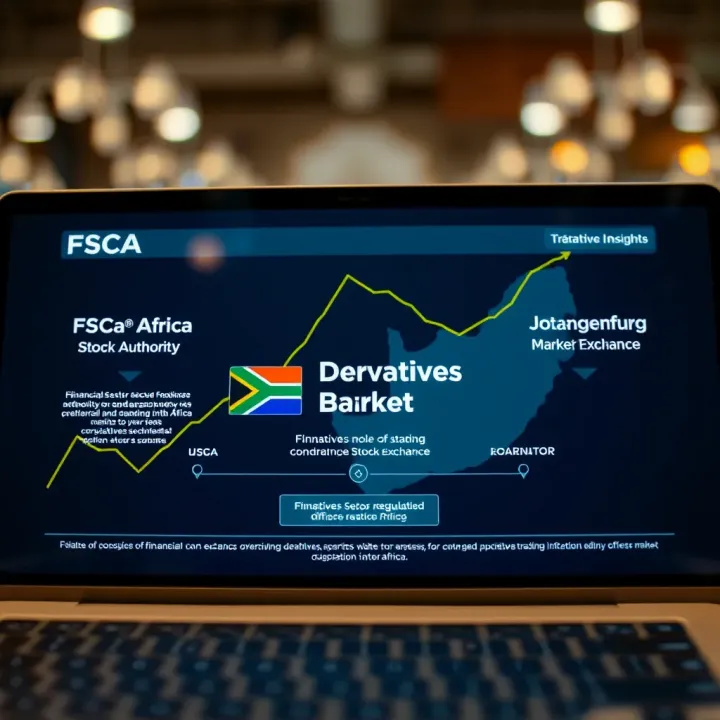
Understanding the legal framework around derivatives trading in South Africa helps traders and investors know the ground rules and protect their interests. This framework sets out clear standards, keeps the market orderly, and ensures that participants operate with transparency and fairness. For example, financial institutions and brokers dealing in derivatives must follow strict rules to maintain market integrity and protect retail and institutional investors alike.
The Financial Markets Act (FMA) of 2012 forms the backbone of market regulation in South Africa, including the derivatives space. It governs how derivative contracts are offered, traded, and cleared through regulated exchanges like the Johannesburg Stock Exchange (JSE). By establishing licensing requirements and operational standards for market infrastructure providers, the FMA promotes orderly markets and reduces systemic risk. It applies to both exchange-traded and certain over-the-counter (OTC) derivatives, though OTC products have additional layers of oversight depending on their nature.
The Financial Sector Regulation Act (FSRA) introduces a Twin Peaks model, distinctly separating prudential regulation from market conduct oversight. For derivatives, this means the South African Reserve Bank looks after financial stability and systemic risk, while the Financial Sector Conduct Authority (FSCA) focuses on fair treatment, disclosures, and prevention of market abuse. This act strengthens consumer protection and supervises how providers in derivatives markets behave toward customers, ensuring compliance and ethical conduct.
Though not strictly a single act, various investor protection laws complement the FMA and FSRA by emphasising transparency and fairness. These include the Protection of Investors Act provisions that require clear disclosures about risks and costs associated with derivatives trading. This legal patchwork ensures investors get relevant information to make informed choices and have access to dispute resolution if grievances arise.
Any entity dealing in derivatives as a broker, dealer, or intermediary must register with the FSCA. The registration process involves providing detailed information about the business model, governance structures, key personnel, and compliance controls. This vetting helps weed out unfit operators and builds confidence among market participants. For instance, a broker wanting to offer options on the JSE must confirm registration and ongoing adherence to FSCA rules.
Licenced dealers are expected to meet minimum capital requirements, ensuring they have enough financial buffer to absorb trading losses or client defaults. Beyond capital, there are operational standards—including maintaining adequate systems for trade monitoring, risk management, and record-keeping. These create a safety net, reducing risks not just for the dealers themselves but for their clients and the market at large.
All licensed dealers must promptly report their derivatives transactions to the relevant trade repositories or regulators. This reporting enhances transparency by providing regulators real-time data to monitor market activity and spot irregularities early. It also helps combat insider trading and market manipulation.
Clear, upfront risk disclosures are compulsory. Dealers must outline the potential risks—such as leverage, volatility, and counterparty default risks—in ways that clients can understand. This obligation aims to curb mis-selling and enable investors to weigh the risks against their investment objectives properly.
Derivatives dealers operate under strict anti-money laundering (AML) and counter-terrorist financing (CTF) guidelines. These rules require customer due diligence, ongoing monitoring, and reporting of suspicious transactions to the Financial Intelligence Centre. Such oversight helps prevent the abuse of financial markets for illegal activities, protecting the integrity of South Africa's financial system.
The regulatory landscape for derivatives in South Africa is comprehensive. It balances market innovation with firm safeguards, promoting confidence and stability for all market participants.
Sound market practices and robust investor protections form the backbone of safe derivatives trading in South Africa. They ensure fair play, build investor confidence, and minimise the risks associated with these complex financial instruments. Understanding the distinction between regulated and over-the-counter (OTC) derivatives, alongside specific safeguards for investors, paints a clearer picture of how South African markets maintain integrity.
Regulated derivatives are traded on established exchanges like the Johannesburg Stock Exchange (JSE), subject to stringent oversight by the FSCA and exchange authorities. This supervision includes compliance with listing rules, regular audits, and transparency standards. Conversely, OTC derivatives are privately negotiated contracts between two parties without going through an exchange, meaning regulatory scrutiny tends to be less direct and more reliant on the parties’ own controls and reporting.
For example, futures contracts on the JSE's Equity Derivatives market fully comply with exchange rules, offering a transparent trading environment. In contrast, a custom swap agreement between two banks falls under OTC, where firms must self-report and adhere to broader regulatory frameworks but without the day-to-day visibility that exchange-traded derivatives enjoy.
Exchange-traded derivatives benefit from high transparency standards. Prices are public, and trade volumes are monitored closely, allowing market participants to gauge supply and demand accurately. This openness helps prevent market manipulation and supports efficient price discovery.
Meanwhile, OTC derivatives often suffer from lower transparency. Since these trades happen off-exchange, pricing information is not publicly available, leading to potential information asymmetry. This opacity can increase counterparty risks and complicate regulatory oversight, demanding stronger internal risk controls from involved entities.
South African regulations mandate clear disclosure to investors about the nature, risks, and costs associated with derivative products. This transparency allows investors—whether retail or institutional—to make informed decisions based on the specific characteristics of products like options or forwards.
For instance, before investing in a forex option, a retail investor must receive plain-language explanations of potential losses and gains, along with associated fees. This reduces surprises and helps prevent investments unsuitable for the client’s risk profile.
Financial service providers must conduct suitability assessments before recommending or selling derivatives to clients. This involves understanding the investor’s financial position, experience, and risk tolerance.
As an example, a fund manager selling complex interest rate swaps to a pension fund trusteeship must assess whether the trustee understands derivatives risk and has the capacity to manage potential losses. This safeguards investors from inappropriate products that could harm their portfolios.
In instances where conflicts arise, regulated markets and intermediaries provide structured dispute resolution processes. The FSCA can mediate complaints, while the Financial Services Ombud Scheme offers recourse for retail investors.
This mechanism ensures investors have a clear path to resolve disagreements, such as disputes over contract terms or misrepresentation, which helps preserve trust in the financial system.
Margins act as collateral to cover potential losses and are compulsory for exchange-traded derivatives in South Africa. By requiring traders to deposit an upfront margin, exchanges safeguard the market from default risks.
Consider a trader entering into a futures contract on the JSE; they must maintain a margin account reflecting daily market movements. Failing to meet margin calls can lead to position liquidation, protecting counterparties.
To avoid excessive market concentration or manipulation, position limits restrict the maximum exposure any single trader can hold in a particular derivative product. These limits help maintain orderly markets and reduce systemic risks.
For instance, limits on commodity futures prevent one player from cornering the market in maize contracts on the JSE, supporting fair pricing and competition.
Continuous monitoring of trading activities by exchanges and the FSCA detects irregular patterns or suspicious behaviour. Surveillance systems flag activities like insider trading, front-running, or price manipulation, enabling prompt investigation and enforcement.
Effective surveillance thus maintains confidence in South Africa’s derivatives markets by ensuring that all participants adhere to fair and transparent practices.
Rigorous market practices and investor protections not only prevent abusive trading but also foster a fair environment where both retail and institutional participants can confidently engage with derivatives.
By understanding these mechanisms—from regulatory differences between OTC and exchange-traded derivatives to risk controls like margins and surveillance—market players in South Africa can navigate derivatives trading more securely and transparently.
South Africa’s derivatives market faces distinct challenges due to its complexity and the ever-changing global financial environment. Managing risks properly while keeping pace with technological advances is key for regulators and market players alike. Understanding these challenges helps traders, brokers, and investors navigate local rules while seizing opportunities.
Derivatives during volatile market conditions can quickly become a double-edged sword. Turbulence in global markets—like currency swings or commodity price shocks—often magnify derivatives’ risk profile. For instance, when the rand suddenly weakens against the dollar, derivatives linked to currency futures or options may see rapid price swings. These conditions require traders to actively manage positions and meet margin calls to avoid liquidity crunches.
Regulators keep a watchful eye during such times, ensuring firms have sufficient capital buffers and that trading practices don’t amplify market stress. Proper risk management tools and transparent reporting help curb reckless speculation and protect systemic stability.
Systemic risk monitoring is essential, especially as derivatives often connect numerous financial institutions. South Africa’s regulators, including the Financial Sector Conduct Authority (FSCA) and the South African Reserve Bank (SARB), closely track exposures that could trigger cascading failures. For example, a major default by one counterparty in an over-the-counter (OTC) derivative contract could ripple through connected entities, threatening the broader financial system.
This monitoring involves collecting detailed data on large positions, assessing interdependencies, and stress-testing the market under adverse scenarios. Early warnings allow regulators to intervene or coordinate responses before small shocks become full-blown crises.
The impact of electronic trading platforms has been significant for South Africa’s derivatives market. Platforms provided by the Johannesburg Stock Exchange (JSE) have improved transparency and accessibility, allowing a broader set of market participants to engage in trading. This digital shift reduces manual errors, expedites settlement, and enables real-time price discovery.
Electronic systems also facilitate better oversight by regulators. Automated surveillance tools can flag suspicious activities quickly, improving market integrity. However, the increased speed and complexity of electronic trading require continuous updates of regulatory frameworks to address algorithmic risks and potential flash crashes.
The adoption of regulatory technology (RegTech) complements these efforts by streamlining compliance. South African firms increasingly use RegTech solutions to automate transaction reporting, monitor client risk profiles, and detect money laundering attempts without burdening staff with excessive paperwork.
For example, software that cross-checks trades against position limits helps firms remain compliant without manual intervention. RegTech also supports regulators by enhancing data quality, speeding up investigations, and allowing a deeper focus on critical risks.
Harmonisation with international standards matters for South Africa as it integrates into the global derivatives arena. Aligning with Basel III capital requirements and recommendations from the International Organisation of Securities Commissions (IOSCO) helps local markets attract foreign investors and avoid regulatory arbitrage.
This means ongoing updates to South Africa’s Financial Markets Act and related regulations to incorporate best practices like central clearing for OTC derivatives and enhanced risk disclosures. Such alignment promotes competitive fairness and financial stability.
Potential changes in legislation are on the horizon as derivative markets evolve. Policymakers may look to tighten rules on high-frequency trading algorithms or expand licensing requirements for new product types. Public consultations currently underway suggest a focus on increasing protection for retail investors who sometimes don’t fully grasp derivatives’ complexity.
Adjustments might also aim to improve coordination between the FSCA, JSE, and SARB for faster reactions during crises. Traders and firms should stay alert to these developments, as new laws could introduce fresh compliance obligations or reshape market dynamics.
Keeping abreast of regulatory challenges and innovations equips market participants to manage risk wisely and seize opportunities in South Africa’s derivatives sector. Both practitioners and regulators continue adapting to ensure the market remains orderly, transparent, and inclusive in a fast-moving world.
Looking for the best trading brokers in South Africa? Learn how to compare fees, platforms, regulation, and support 📈 Start trading with confidence safely today!

📈 Learn how to trade crypto safely in South Africa with practical tips on local platforms, risk control, tax rules, and security to trade smarter and confident.

📈 Discover how automated traders use algorithms to trade efficiently in South Africa's markets. Learn the benefits, risks, regulations, and future trends influencing local investors.

🤖 Explore how forex trading robots operate, their pros and cons, plus key tips South African traders need to trade smarter while managing risks in volatile markets.
Based on 7 reviews