
Robots in Forex Trading: A Guide for South African Traders
🤖 Discover how forex trading robots work, their pros and cons, key features, and tips for South African traders to pick and use automated systems wisely.
Edited By
Daniel Hughes
Forex trading robots have become a popular tool for automating currency trades without the need for constant manual input. These software programmes execute trades based on set criteria, reacting swiftly to market shifts, and theoretically removing the emotional rollercoaster that many traders face. For South Africans venturing into the forex market, understanding how these robots operate is crucial before diving in.
At its core, a forex trading robot is a programme coded with a specific strategy. This strategy includes rules for entering and exiting trades, managing risk, and sometimes adapting to varying market conditions. Once the robot is activated on trading platforms like MetaTrader 4 or 5, it scans live market data and places trades automatically when conditions fit the pre-set parameters.
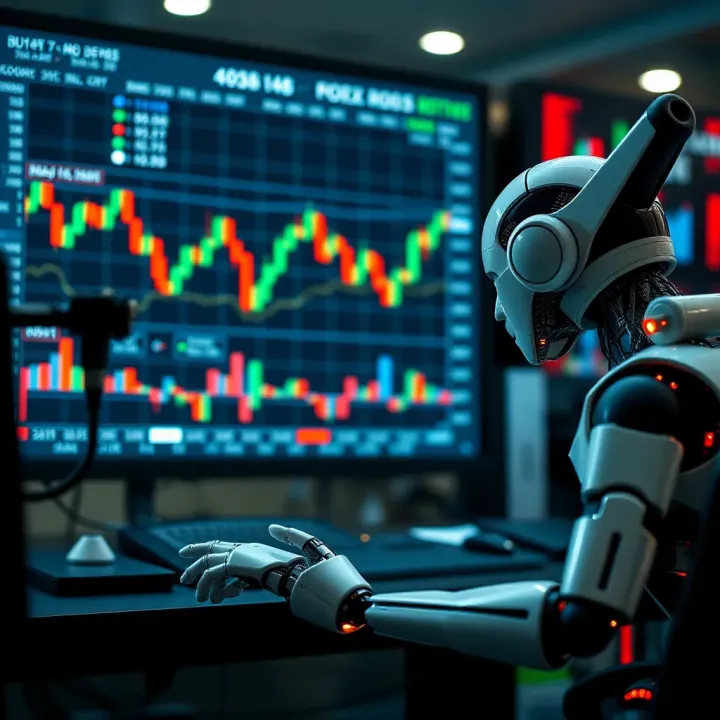
While the promise of hands-free trading is attractive, it's important to remember robots only perform within the limits of their programmed logic. They don’t adapt in the way an experienced human might in unexpected scenarios.
Common advantages for South African traders include:
24/7 Market Monitoring: The forex market never sleeps, and a robot can track opportunities around the clock even during local off-hours.
Speed: Robots can enter and exit positions faster than a human, grabbing short-lived openings.
Emotionless Execution: Decisions aren’t clouded by fear or greed.
However, downsides should be weighed:
Dependence on Strategy Quality: A poorly coded robot can magnify losses.
Market Conditions: Sudden shifts, like unexpected economic news or political events, may cause robots to struggle or fail.
Over-optimisation Risk: Some robots perform well historically but fail in live markets due to overfitting.
For South African traders, considerations also include:
Reliable internet connectivity amid frequent loadshedding that can disrupt automated trading.
Account facility with trusted brokers licensed by the FSCA (Financial Sector Conduct Authority) to ensure fair trading environments.
Awareness of regulatory or tax implications related to automated trading profits.
In short, forex trading robots can be a helpful complement in a trader’s toolkit but are no silver bullet. Applying due diligence, backtesting strategies with historical data, and starting with small trade sizes helps manage risks reasonably. As you explore algorithmic trading, a clear understanding of both the technology and local market factors will help you trade smarter and safer in the South African forex space.
For South African traders, understanding how forex trading robots work is key to making informed decisions about using them. These automated systems execute trades based on pre-defined algorithms, removing much of the guesswork and emotional bias that can influence decision-making when trading manually.
At the core of every trading robot lies an automated algorithm. These algorithms are sets of rules coded into software to analyse market data and execute trades without human intervention. For example, a robot might be programmed to buy the US dollar against the South African rand (USD/ZAR) when certain technical indicators align, such as when the Relative Strength Index (RSI) signals oversold conditions and the moving averages indicate an upward trend. These rules are tested and fine-tuned using historical data before live deployment.
Forex robots typically use a handful of popular strategies tailored to current market conditions:
Trend Following: The robot buys currency pairs showing a strong trend and exits when momentum slows. This strategy is straightforward and suits volatile pairs like EUR/ZAR during international economic announcements.
Range Trading: When a currency pair moves within a specific price band, the robot buys near support and sells near resistance. This is useful during periods of low market movement, common after hours in South African time.
Arbitrage: Robots exploit price differences across various brokers or platforms to secure quick profits. While rare and tricky due to latency, this strategy appeals to sophisticated traders with fast data feeds.
Scalping: Executing many small trades to profit from minor price changes often involves high-speed execution, demanding reliable connectivity and low latency.
Traders can choose robots tailored to their preferred style or combine multiple strategies via custom coding.
Most forex trading robots are designed to integrate seamlessly with popular platforms like MetaTrader 4 (MT4) and MetaTrader 5 (MT5), which are widely used by South African brokers. This integration allows easy installation of robots (also called Expert Advisors or EAs) and direct connection to live or demo trading accounts.
These platforms provide tools for backtesting robot strategies on past market data, helping traders assess expected performance before committing real funds. Additionally, traders can monitor and adjust robot parameters in real time, retaining some level of control.
Automated forex trading tools depend heavily on stable internet connections and configured broker accounts. South African traders should ensure their chosen brokerage supports algorithmic trading and complies with local regulatory standards to avoid inputting software that won’t function properly or could expose them to undue risk.
Understanding these operational fundamentals gives traders a clearer view of how to harness forex robots effectively while staying alert to their limitations and the practical steps needed to manage and customise them.
Forex trading robots bring clear benefits to traders, especially in environments as dynamic as South Africa’s financial markets. These systems help reduce human error and bring discipline, which many find challenging with manual trading. Let’s look at some core advantages.
One big advantage is that trading robots eliminate the emotional side of trading. Humans tend to panic or get greedy, leading to rash decisions or hesitation. A robot, however, sticks strictly to its programmed rules—buying or selling only when certain conditions are met. For example, in a sudden market dip caused by an unexpected announcement, a robot won’t hesitate or second-guess; it will execute the trade based on its algorithm. This unwavering discipline can protect traders from costly mistakes common in South Africa’s often volatile forex conditions.
The forex market never sleeps, trading 24/5 across multiple time zones. For South African traders, this round-the-clock nature means opportunities can arise at any hour, often outside normal working times. A trading robot tirelessly scans the market continuously, ready to act whether it’s midday or 3 am SAST. This non-stop monitoring helps capture breakouts or reversals too quick for a human to catch, maximising chances of profit in volatile hours.
Forex robots excel at executing trades swiftly and precisely. While a human trader might hesitate or wrestle with placing orders, a robot completes all steps almost instantly. For example, in scalping strategies where timing matters down to seconds, the robot's rapid order placement and execution can lead to better entry and exit prices. Moreover, the robot avoids slippage errors that might happen when markets move fast, which is especially valuable during high-impact economic data releases affecting the Rand.
Using a forex trading robot offers consistent, emotion-free trade execution that’s impossible for most humans to match, especially amid South Africa’s unpredictable market swings.
By automating the trading process, these robots provide South African traders with tools to better navigate the challenges of forex trading, from emotional bias to time zone differences and split-second decision-making needs.
Using forex trading robots isn’t without its pitfalls. While these automated tools promise efficiency, South African traders should be cautious of risks that can lead to losses if ignored. Understanding these risks helps manage expectations and protects your investment.
Forex markets can be wildly unpredictable, sometimes moving sharply due to unexpected news or global events. Robots rely on pre-set algorithms, which might not react well to sudden swings or black swan events. For example, during a sudden rand depreciation after an unplanned political announcement, a robot without adaptive controls may keep trading in an unprofitable direction, escalating losses.
Plus, technical failures can hit anytime. A power outage or unstable internet connection—quite common during regional loadshedding—can interrupt robot operations. If a trade is left half-executed or signals go unnoticed, this can cause missed opportunities or unintended risks. Reliable backup systems and uninterrupted power supply are essential if you want to run automated trading smoothly.
Many trading robots are fine-tuned based on historical data, but this can be a double-edged sword. Over-optimisation happens when a robot fits too perfectly to past market conditions, capturing noise rather than genuine trends. This leads to an inflated sense of performance, only to crash when faced with live, changing market realities.
Imagine a robot designed around a calm market period suddenly facing Eskom’s load shedding impacts on financial markets or unexpected economic data releases. Its past 'top' performance won’t guarantee future success. South African traders must watch out for vendors pushing impressive backtested stats without clear real-world results. No robot can eliminate risk entirely, so keeping a clear head about performance claims is key.
Sadly, the forex trading robot scene attracts its fair share of dodgy providers, especially online. Promises of guaranteed profits or ‘set and forget’ solutions are red flags. Some products may not do what they say or could be outright scams stealing your funds.
To avoid falling victim, verify the provider’s track record and check if the robot is compatible with regulated South African brokers. Ask for trial periods or use demo accounts to see how the software performs without risking real money. In South Africa, talking to fellow traders or checking reputable platforms like MyBroadband can also steer you clear of unreliable sellers.
Remember: No matter how smart a forex trading robot is, it’s not a shortcut to riches. Trading involves risks, and robots are tools that need careful management in real market conditions.
By recognising these limitations and acting with caution, South African traders can avoid common traps and make smarter decisions when using forex trading robots.
Selecting the right forex trading robot can make a significant difference to your success as a trader. South African markets come with their own set of challenges, such as volatility influenced by local economic factors and the rand's volatility against major currencies. This makes it essential to pick a robot that suits not just your trading style but also fits the local trading environment.
One of the first things to look for in a forex trading robot are the features that dictate how it operates. For instance, does it allow you to adjust risk levels or pick specific currency pairs? You should also consider performance metrics like the robot's historical win rate, drawdown levels (which show how much you could lose), and average monthly returns. A robot boasting a consistent 90% win rate but with a 40% drawdown might be taking unsustainable risks. Look for detailed performance reports, preferably verified by third-party services, to avoid inflated claims.
Regulation matters when choosing both the robot and the broker it will work with. In South Africa, ensure the broker is licensed by the Financial Sector Conduct Authority (FSCA). This adds a layer of security and aligns with local laws such as FICA (Financial Intelligence Centre Act), which affects account verification and money laundering checks. Also, check if the robot integrates smoothly with the broker’s trading platform, commonly MetaTrader 4 or 5. For example, some robots may not support brokers who use proprietary platforms, which limits your options.
Trying before buying is always wise. Look for robots offering a free trial or demo version so you can test their performance without risking real cash. Backtesting is another critical process where the robot runs through historical data to show how it might have performed. While this isn't a guarantee for future profits, it helps identify weaknesses. Remember to ensure the backtesting covers various market conditions, including volatile periods—otherwise, you might be facing unexpected losses once in live trading.
Choosing a forex trading robot isn’t about hunting for a magic wand; it’s about matching the tool to your needs and environment. Always be sceptical of too-good-to-be-true returns, and test thoroughly before committing your funds.
South African traders should pay special attention to brokers’ compliance with local rules and the unique challenges posed by rand fluctuations and market timings. That thoughtful approach will help you pick a robot that fits your trading plan and safeguards your capital effectively.
Using forex trading robots without proper care can quickly lead to losses, especially in the volatile currency markets South Africans face today. Responsible use means setting clear limits, continuous review, and blending automated trading with the human touch. It’s not simply about switching on a robot and hoping for the best; rather, it calls for active involvement to gain consistent results.
Traders should view forex robots as tools rather than profit machines. These algorithms operate by predefined rules but can’t predict unexpected events like geopolitical shocks or sudden Eskom outages that rattle markets. For example, expecting your robot to make thousands in a few days during loadshedding disruptions is far-fetched. Instead, aiming for steady, manageable returns over months with controlled risks is more sensible. Remember, past backtesting results on historical data don't guarantee future performance under different market conditions.
Even the slickest trading robot isn’t a "set-and-forget" solution. You need to keep an eye on its trades and regularly tweak settings based on performance and changing market trends. South African traders might, for instance, adjust take-profit or stop-loss levels during volatile times like the lead-up to National Budget announcements, which often cause currency swings. Monitoring helps catch faults early—say, during prolonged market flatness where a robot might overtrade or fail to close positions correctly.
Relying solely on robots can leave gaps that human judgement fills well. Successful traders often blend automation with manual interventions. They might let the robot handle entry and exit signals but take over to manually close trades if news events disrupt normal patterns, such as unplanned political statements or international sanctions affecting the rand. This combo approach balances the robot’s speed with a trader’s contextual insight, reducing risks tied to purely automated systems.
Automated forex trading can streamline operations, but it’s your ongoing oversight and common sense that make it worthwhile in the unpredictable currency market.
In sum, responsible use of forex trading robots in South Africa involves realism in goals, vigilant performance reviews, and thoughtful integration with manual trading practices. This approach helps tap into the benefits of automation without falling prey to its pitfalls or market surprises.
🤖 Discover how forex trading robots work, their pros and cons, key features, and tips for South African traders to pick and use automated systems wisely.
📈 Learn how signal trading helps South African investors make smarter moves using alerts, market indicators, pros, cons, and strategy tips. 🇿🇦

Explore the stories and strategies of South Africa’s richest forex traders 💰, their market impact, income sources, and tips for aspiring traders 📈.
🤝 Learn how South African forex traders can secure funding, choose the right funder, and navigate legal and trading strategies for success in forex markets.
Based on 12 reviews