

Understanding Forex Trading Robots for South African Traders
🤖 Explore how forex trading robots operate, their pros and cons, plus key tips South African traders need to trade smarter while managing risks in volatile markets.
Edited By
Sophia Walters
Forex signal apps have become a practical aid for South African traders looking to make smarter moves in the currency market. These apps provide real-time trade alerts based on market analysis, helping you spot opportunities without staring at charts all day. But not all signal apps are created equal, and selecting the right one involves understanding your goals, risk appetite, and the specific features that matter.
In South Africa, forex trading comes with its own set of challenges, including volatile Rand movements, fluctuating liquidity during local market hours, and the impact of load-shedding on connectivity. Choosing a forex signal app that takes these factors into account can make a notable difference.
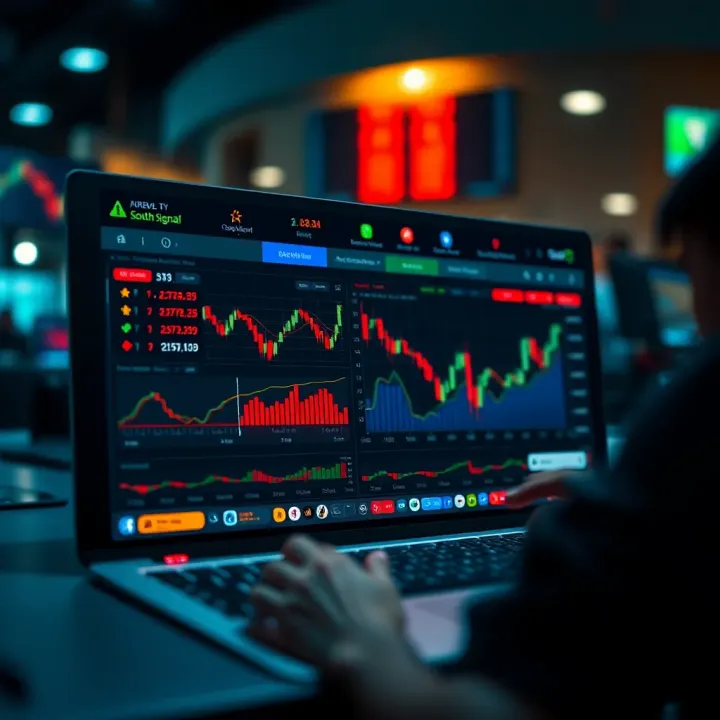
When looking for the right app, consider these points:
Accuracy and track record: Look for apps with verified performance histories rather than flashy promises. Real users’ feedback and transparent win rates often tell the true story.
Speed of signals: Markets move fast. An app that delivers signals with delays can cost you potential profits. Real-time push notifications are a must.
Ease of use: It’s no good if the interface is clunky or confusing, especially when you need to act quickly. Simple dashboards and clear alerts matter.
Local market relevance: Ideally, the app should provide insights that specifically account for Rand volatility and South African market hours.
Cost vs value: While free apps might attract you, paid services tend to offer better analysis and support. However, avoid overpriced subscriptions that don’t deliver.
Choosing a forex signal app is more than ticking boxes on features; it’s about matching the tool to your trading style and local market realities.
Keep in mind that signal apps work best as part of a broader strategy. No signal, however good, is foolproof. Use signals as guides rather than gospel. With the right choice, these apps can sharpen your trading decisions, save time, and help you handle the twists and turns of forex trading in Mzansi.
Understanding forex signal apps is essential for anyone serious about trading currencies, especially in South Africa where market conditions can change quickly. These apps provide alerts or recommendations about when to buy or sell foreign currencies based on various analyses. For instance, a trader following signals might receive a notification advising to sell the US dollar against the South African rand ahead of an expected rand rally due to favourable economic data.
Using these tools wisely can simplify decision-making and save time spent on constant market monitoring. However, it requires a clear grasp of what signals represent and their limitations. Knowing the types of signals and how they’re generated helps traders filter reliable advice from noise, avoiding costly mistakes.
Definition and purpose
Forex signal apps are software platforms or mobile applications that send trade alerts to users based on analysis of the forex market. Their primary aim is to guide traders on potential profitable entry and exit points for currency pairs. This helps both novice and experienced traders stay informed without having to constantly watch charts or news feeds.
Types of signals provided
Forex signals typically come as recommendations to buy or sell a specific currency pair at a certain price level with details on stop-loss and take-profit targets. There are several types:
Manual signals: Generated by human experts who analyse charts and economic events.
Automated signals: Provided by algorithms running technical indicators like moving averages or RSI.
Copy trading signals: Where users automatically mirror trades executed by successful traders.
Each comes with its own trade-offs between flexibility and reliability, something traders must consider.
How signals are generated
Signals can be derived through technical analysis, fundamental analysis, or a mix of both. Technical signals depend on price patterns and indicators, like a moving average crossover signalling a trend change. Fundamental signals might reflect reactions to economic reports or geopolitical events influencing currency strength.
Sometimes machine learning models analyse large datasets to generate predictive signals. Yet, none guarantee success, so context and judgement remain vital.
Receiving and interpreting signals
Most forex signal apps send notifications directly to your mobile or desktop, often via push alerts or email. A signal might say: "Buy EUR/ZAR at 18.70, stop-loss 18.50, take-profit 19.10." Traders then decide how to act on this, considering their risk tolerance and market outlook.
It's crucial to understand the recommended parameters within signals and not blindly follow them. Proper interpretation involves checking if the signal aligns with your trading strategy and local market conditions.
Timing and execution of trades
Timing is everything in forex. Signals often come with expiry times or ideal trading windows. For instance, a signal influenced by the South African Reserve Bank interest rate decision might only be valid for a few hours.
Delays in executing trades reduce the chance of profit, especially in volatile markets. South African traders should consider their internet reliability, particularly during Eskom loadshedding, which can interrupt timely access.
Integration with trading platforms
Some forex signal apps integrate directly with trading platforms like MetaTrader 4 or MT5. This allows for semi-automatic or automatic trade execution based on received signals, cutting down reaction time.
Alternatively, signals might be manual alerts without direct integration, requiring the trader to enter trades themselves. Integration can improve efficiency but also adds complexity and reliance on the app’s accuracy.
Successful use of forex signal apps depends on understanding the signals' nature, promptly applying them, and considering local market nuances such as rand volatility and connectivity challenges.
In sum, getting to grips with what forex signal apps are and how they operate is the first step for South African traders wanting to enhance their forex game without blindly following every alert that pops up.
South African traders face unique conditions — from rand fluctuations to periodic loadshedding and connectivity challenges. Forex signal apps can ease some of these complexities but come with their own drawbacks. Knowing the benefits alongside potential risks helps traders make informed choices rather than relying blindly on any app.
Forex signal apps distil vast amounts of market data into clear trade suggestions, which can be a godsend if you’re juggling multiple tasks or lack the time to monitor charts constantly. For instance, during Eskom’s Stage 4 loadshedding, when internet access might be unstable, receiving concise signals helps keep trades on track without hours spent analysing moves manually.
This simplicity doesn’t mean a loss of control — the signals flag potential trades based on trends and analysis, so you can decide whether to act, tweak, or skip. It’s like having a quick daily briefing before jumping into the market.
Many forex signal providers employ seasoned analysts or use well-tuned algorithms that scan global economic events affecting currencies. South African traders benefit by tapping into insights on factors like SARB interest rate changes or geopolitical shifts influencing ZAR pairs.
For example, if the central bank hints at rate adjustments, signal apps might flag opportunities in USD/ZAR or EUR/ZAR that an average trader might miss. This expert edge levels the playing field, especially for new or part-time traders who can’t dedicate entire days to market research.
Digging through economic reports, news, and currency charts can eat up precious hours, sometimes to little effect if the trader lacks a strategy. Signal apps do the heavy lifting by sifting relevant data and trends, delivering just the actionable points.
Given South Africa’s fast-moving market environment, particularly ahead of reports like GDP stats or mining production numbers, being able to act quickly without full deep dive analysis saves stress and resources.
Not every signal app delivers accurate or timely advice. Some rely heavily on past patterns which may not reflect sudden economic changes or shocks. For instance, unexpected political announcements can unsettle currency pairs abruptly, making signals based on outdated patterns risky.
South African traders should verify signal track records where possible and treat recommendations with a healthy dose of scrutiny rather than automatic trust.
Dependence on signals without personal knowledge or strategy can lead to missed opportunities or amplified losses. The market rewards those who understand risks, not just follow instructions.
A trader solely glued to signals might ignore crucial local news like municipal policy changes or petrol price hikes that affect the rand indirectly. Balancing signals with your own research is essential.
Many reputable forex signal apps come at a price, sometimes charging in US dollars which can sway based on exchange rates. Subscription fees can pile up, especially if you try multiple apps.
Also, free apps might bombard users with ads or offer lower-quality signals. South African traders should weigh the cost against expected benefits, possibly starting small or using trial periods before committing.
Weighing benefits against these limitations helps you choose a forex signal app that complements your trading style and local context, rather than complicating it.
Selecting a forex signal app is not just about picking the flashiest interface or the cheapest option. South African traders need to focus on key features that directly impact their ability to trade profitably and reliably. Precision in signals, ease of access, and reasonable costs all shape whether the app will serve your trading style and goals effectively.
Verified performance records matter a lot when choosing a forex signal app. Verified records show actual results over an extended period rather than just cherry-picked wins. For instance, an app that consistently produces signals leading to profitable trades on major currency pairs like USD/ZAR or EUR/USD proves its reliability. Without such verification, you could easily follow faulty signals that drain your capital.
Transparency is just as critical. You want an app that openly shares its success rates, losses, and historical data. This openness builds trust and helps you gauge the real risks involved. Avoid apps that hide their stats or promise unrealistically high returns without any documented backing. Remember, a trustworthy app will also explain its strategy and the market conditions where its signals perform best.
A good forex signal app should offer a straightforward user interface. Whether you're trading after hours or during a quick break, navigating the app must be hassle-free. For example, clear charts, easily readable signal alerts, and simple trade execution options can make a big difference.
Mobile compatibility is especially important for South African traders coping with loadshedding or unexpected travel. Apps that run smoothly on Android and iOS devices let you keep tabs on your trades anywhere, not just when you’re at a desktop. Vodacom or MTN network coverage might dip in some areas, so lightweight apps with low data usage are advantageous.
Notification and alert settings allow customisation to fit your trading routine. Some traders want push notifications immediately when a signal drops, while others may prefer daily summaries. The ability to adjust alert frequency and sound means you won’t miss important trade signals but won't drown in constant pings either.
You’ll find both free and paid signal apps in the South African market. Free options offer a way to test the waters, but often with limitations like delayed signals or lower accuracy. Paid subscriptions usually provide real-time alerts, higher accuracy, and better support. For example, a monthly subscription around R200-R400 may grant access to professional-grade signals backed by verified trading histories.
Trial periods and refunds are worth looking out for. They let you explore the app risk-free before committing your money. Given the volatile nature of forex trading, having the option to cancel without penalty if the app doesn’t meet expectations is a welcome safety net.
Ultimately, value for money depends on how well the app fits your strategy and trading volume. Don't just grab the cheapest option; consider whether the signal quality, ease of use, and support justify the cost. A well-chosen app can save time and improve trade outcomes, making even a modest fee worthwhile.
When picking a forex signal app, prioritise verified results and transparent performance data. Combine that with an easy-to-use interface tailored for mobile access and sensible costs to enhance your trading reliability in South Africa’s unique environment.
Integrating forex signal apps into your trading routine can be a real asset, especially in a busy market. These apps offer timely alerts that, when used wisely alongside your own research and strategy, can sharpen your decision-making without taking over the entire process. South African traders benefit most when they see signals as one piece of the puzzle rather than a silver bullet.
Relying solely on signal apps without understanding the market context can be risky. It pays to cross-check the signals against your own analysis — whether that’s following key economic indicators, reading local news, or tracking currency pairs like the rand-dollar (ZAR/USD) yourself. For example, if a signal suggests buying USD/ZAR because of expected rand weakness, verify it against recent Reserve Bank announcements or global commodity price shifts that impact rand sentiment.
No signal app can guarantee profits; losses are part of forex trading. That’s why managing risk is crucial. Use stop-loss orders and only trade amounts you’re comfortable losing. Limit exposure on a single trade to a small percentage of your capital — say 1-2% — to protect your account from significant swings. Signal apps should be tools to support this cautious approach, not reasons to take reckless bets.
Forex signals can boost your trading, but it’s unrealistic to expect them to make you rich overnight. Market conditions change, and no signal is right all the time. Understand that losses happen, and treat signal advice as guidance, not a command. Regularly review your trades, learn from mistakes, and adjust your approach. Patience and consistency often count more than chasing quick wins.
The rand is known for its swings, affected by everything from commodity prices to political developments. This volatility means signals involving ZAR pairs can change quickly. Traders must keep an eye on the rand’s behaviour and be ready to act fast or hold back when the market’s choppy. A signal suggesting a trade on ZAR/EUR, for example, might need careful timing amid rand turbulence.
Local and global economic reports — such as the SARB’s quarterly Monetary Policy Committee statements, unemployment figures, or US inflation data — heavily influence currency movements. Signal apps often incorporate some of these factors, but it’s wise to stay informed yourself. Before acting on a signal, check whether any upcoming news events might upset markets and cause sudden moves.
For South African traders, loadshedding is not just inconvenience; it can disrupt your ability to receive timely signals or execute trades. Reliable internet access is essential. Consider backup power sources like UPS batteries or mobile data as a fallback during outages. Also, choose forex signal apps that offer offline notifications or SMS alerts so you’re not stranded when the power drops.
Using forex signal apps well means blending technology with your own knowledge, local market smarts, and practical steps to manage risk. That’s how South African traders can make better, quicker calls while navigating the unique challenges of our market.
Choosing a reliable forex signal app is a key step for South African traders wanting to improve their trading accuracy and speed. Popular apps recommended locally often offer features tailored to the unique challenges faced here, such as rand volatility and intermittent internet due to loadshedding. Using an app respected both regionally and internationally can provide more than just trading signals — it brings confidence, local support, and ease of use, essential for effective trading.
Apps developed or tailored for South African markets often provide deeper insight into local economic factors. Take, for instance, platforms linked to well-established brokers like IG or HotForex, which offer signal services adapted to rand fluctuations and local trading hours. These providers understand that economic announcements from SARB or even farm output reports can sway currency pairs involving ZAR more than international events might.
Moreover, regional apps typically come with dedicated customer support familiar with South African regulatory requirements and common trader challenges. This localised help can be a lifesaver for those new to forex trading or those learning how to interpret signals, especially when internet connectivity is patchy during Eskom’s scheduled outages.
On the flip side, many South African traders also use internationally recognised apps like MetaTrader signals and Trading Central. These platforms offer access to diverse currency pairs, including ZAR crosses, with sophisticated analytic tools and often real-time data from various global markets.
While they may lack localised customer service, these apps have the advantage of proven algorithms refined through years of global trading experience. Traders can expect regular updates, varied signal types — from technical to fundamental — and higher liquidity options, which can be crucial during volatile market phases.
Before committing any real money, testing a forex signal app with a demo account is a practical first step. Demo accounts allow you to apply signals in a simulated environment, mirroring live market conditions without risking capital. For example, many MT4 or MT5 broker platforms offer demo accounts where you can connect the signal app and observe how signals would play out in real time.
This stage is valuable to understand the timing, accuracy, and type of signals provided, and lets you assess whether the app fits your trading style.
Customer reviews and trader forums are good barometers of an app’s reliability and user-friendliness. Platforms like Forex Peace Army or local groups on social media can offer first-hand experiences from other South African traders, highlighting issues like delayed signals, hidden fees, or poor support.
Beyond star ratings, look for detailed feedback mentioning consistency of signals, ease of app navigation, and how the provider handles complaints. This qualitative insight is crucial since a well-rated app might still have quirks that affect your specific trading needs.
Forex trading in South Africa is subject to regulations from the Financial Sector Conduct Authority (FSCA). When selecting a signal app, verify whether the app provider or associated broker complies with these regulations. This compliance guards against scams and ensures your data and funds enjoy a certain degree of protection.
Be wary of apps promising guaranteed profits or lacking clear disclosure about their trading methods and regulatory status. Checking the FSCA listings and the app’s terms can help confirm legitimacy and foster safer trading.
A savvy choice of signal app combines local market insight, thorough testing, user feedback, and clear regulatory standing, especially in a dynamic trading environment like South Africa’s.
By bearing these factors in mind, South African traders can better navigate the crowded market of forex signal apps and find one that genuinely supports their trading goals.
🤖 Explore how forex trading robots operate, their pros and cons, plus key tips South African traders need to trade smarter while managing risks in volatile markets.
📈 Learn how signal trading helps South African investors make smarter moves using alerts, market indicators, pros, cons, and strategy tips. 🇿🇦
Explore the stories and strategies of South Africa’s richest forex traders 💰, their market impact, income sources, and tips for aspiring traders 📈.

🤝 Learn how South African forex traders can secure funding, choose the right funder, and navigate legal and trading strategies for success in forex markets.
Based on 13 reviews