
Understanding Synthetic Indices Lot Sizes
📊 Learn how to calculate and manage synthetic indices lot sizes for smarter trading. Improve your strategy with clear guidance tailored for South African traders.
Edited By
Liam Robinson
For traders working with indices, grasping how to manage your lot size is non-negotiable for good trade planning and risk control. The indices lot size calculator is a tool that helps break down the exact size of a position you should take, based on your available capital, risk tolerance, and market conditions. It's especially relevant for South African traders where margin requirements and leverage rules often differ from global norms.
Understanding lot size in index trading isn't just about knowing the number of units you're buying or selling. It directly influences your exposure to the market and, by extension, your potential profit or loss. For example, when trading the JSE Top 40 index or an international index like the US S&P 500, determining the right lot size involves more than just picking a standard amount—it requires factoring in the contract specifications, current price, and your personal risk boundaries.
Margin and leverage play a big part here. Your margin is the minimum amount you must put down to open a trade, while leverage essentially scales up your buying power. If you're trading with a 1:10 leverage, a R10,000 deposit could control a R100,000 position, but this also means losses impact your deposit more quickly if the market turns against you.
Using an indices lot size calculator will help you avoid biting off more than you can chew by translating your risk preferences into concrete trade sizes. It takes into account margin, leverage, and index volatility to suggest the safest position size.
Here's how the calculator usually breaks down the process:
Input your total trading capital.
Decide your maximum risk per trade (often expressed as a percentage of your capital).
Enter the stop-loss distance — how many points away you'll cut losses.
Add leverage and margin details from your broker's platform.
The output tells you the ideal lot size aligned with your risk appetite.
In South African trading conditions where broker requirements and load-shedding can impact your real-time decision-making, planning with a lot size calculator ensures that your trades remain within manageable thresholds. It protects your portfolio from sudden shocks while allowing you to participate confidently in the indices space.
Next sections will dive deeper into how to apply this tool practically, including local nuances related to margin, leverage, and index contract specifications common on South African platforms.
An indices lot size calculator is a handy tool that helps traders determine the optimal amount of units—or "lots"—to trade in an index market. This calculator takes into account your account size, risk tolerance, and current market conditions to suggest a lot size suited to your trading position. The practical value lies in balancing potential profit against risk, preventing traders from accidentally overexposing themselves.
Lot sizes in index trading typically come in three basic sizes: standard, mini, and micro. A standard lot usually represents a fixed number of units of the underlying index—for example, 10 units of the FTSE 100 index. Mini lots are smaller, often one-tenth the size of a standard lot, while micro lots are even smaller, roughly one-hundredth the standard size. This gradation enables traders with smaller accounts or lower risk appetites to participate without risking large sums.
For instance, if you’re trading the JSE Top 40 and your trading platform offers mini and micro lots, you can adjust your exposure more finely. This is especially useful during volatile periods or when testing strategies with limited funds.
The chosen lot size directly affects the value of each point movement in the index. A larger lot size means that one point move causes a larger gain or loss. For example, trading 1 standard lot on the S&P 500 means that a single point move could translate into tens of rands in profit or loss, while a micro lot results in a much smaller financial impact.
Understanding this relationship helps traders gauge how much capital they are putting at risk with each trade. Picking a lot size too large without considering your account size and volatility can lead to rapid losses.
Risk management is at the heart of successful index trading, and the lot size calculator helps traders keep risk within manageable limits. By entering details such as the stop-loss distance and percentage of capital willing to be risked, traders receive a lot size recommendation that aligns with those restraints. This approach limits the chance of blowing the account on a few bad trades.
For example, if you have R20,000 in your trading account and only want to risk 2% per trade, the calculator will factor these figures to recommend a lot size that won’t exceed a R400 loss if your stop-loss is hit.
Besides managing risk, the calculator assists traders in planning their position sizes realistically based on account balance and market volatility. This planning ensures that traders don't jump into trades blindly or over-commit.
For example, during busy news days when volatility spikes—like after a SARB interest rate decision—using the calculator to reduce lot size can prevent unexpected losses associated with wild price swings. Planning your trades around such insights makes a real difference in consistency and longevity.
Using an indices lot size calculator is less about crunching numbers and more about nurturing a smart discipline that protects your capital and builds confidence in trading decisions.
In summary, knowing your lot size options and using a calculator to align those with your risk profile and market conditions is essential for anyone serious about trading indices, especially in South Africa's dynamic trading environment.
When deciding on your lot size in index trading, two main factors influence your calculations: margin requirements and leverage. Understanding these components helps you manage your capital efficiently and control risk. Without a clear grasp of how margin and leverage interplay, you could easily overexpose yourself, especially in volatile index markets.
Margin in index trading is essentially the deposit you must put down with your broker to open a position. Think of it as a security bond – you don’t pay the full value of the trade upfront but only a fraction. For example, if you want to control a position worth R100,000 and the margin requirement is 10%, you need to have R10,000 available in your account. This means your capital can go further, but also exposes you to larger swings.
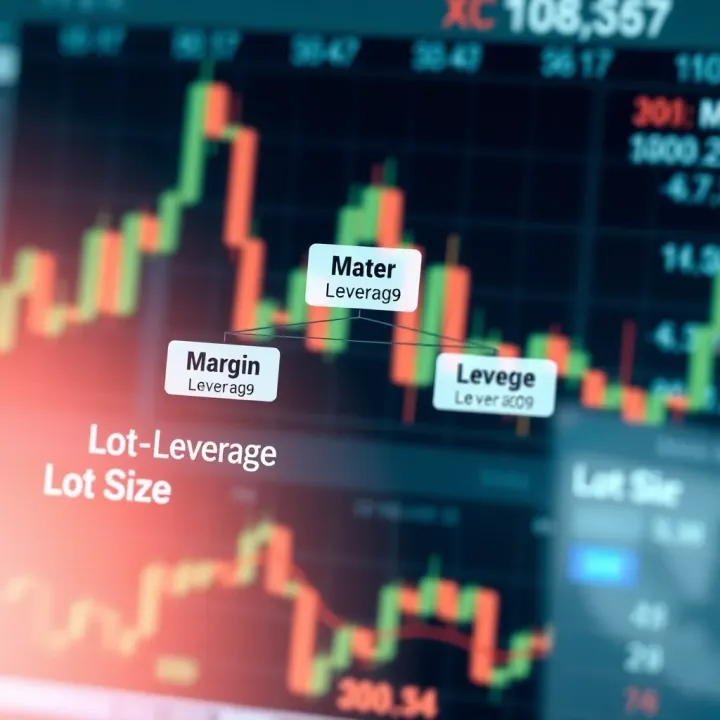
The practical side is this: margin acts as your buffer. If your trade moves against you and your account equity falls below this margin, the broker might call a margin call or close your position to prevent further losses. South African brokers often set margin requirements based on the index volatility and regulatory guidelines. It’s always wise to check your broker’s specific margin rules before trading.
Different brokers have different margin requirements influenced by factors like the index you’re trading, your account type, and market conditions. For instance, a broker might require a 5% margin for a blue-chip index like the FTSE/JSE Top 40 but 15% for a more volatile small-cap index. Knowing these requirements is essential because they dictate how much capital you need for a trade.
In South Africa, brokers also consider exchange rates when trades involve foreign indices denominated in USD or EUR. Fluctuating rates can affect the Rand-equivalent margin you need. That means even if your margin requirement percentage stays the same, you might need more Rand during weaker currency cycles.
Leverage magnifies your exposure in index trading. For every rand you invest, leverage can multiply your buying power. If your broker offers 10:1 leverage, R1,000 lets you trade R10,000 in the market. This boosts potential gains but also increases potential losses.
For example, say you choose a lot size exposing you to R50,000 with 10:1 leverage. Your actual capital tied up (margin) would be around R5,000. But if the market suddenly dips 5%, your position value falls R2,500, wiping out half your margin. That’s why knowing how leverage affects exposure helps tailor your lot size to your risk appetite.
Managing leverage means striking a balance between potential profit and safety. Excessive leverage can quickly drain your account during short market swings, while too little leverage might limit opportunities. South African traders should consider their local market realities – ATM volatility, economic events like SARB rate decisions, or even Eskom loadshedding disruptions.
A practical approach is to limit your leverage level and adjust your lot size accordingly. Many experienced traders recommend risking no more than 1-2% of your trading capital per trade. Aligning leverage use with strict risk management ensures you stay in the game even when the market throws curveballs.
Understanding how margin and leverage influence your lot size is crucial. They help you trade smarter, not just bigger, preserving your capital and keeping risk in check.
By focusing on these two components, you build a solid foundation for using an indices lot size calculator effectively and trading confidently in the South African market.
Using an indices lot size calculator correctly can make a solid difference in managing your trades effectively. It helps you determine an appropriate position size that matches your trading strategy, available capital, and willingness to risk. Instead of guessing, you put in clear parameters and get practical outcomes that align with your trading goals.
The first step is selecting the index you want to trade, such as the JSE Top 40, US30 (Dow Jones), or UK100 (FTSE 100). Each index has its own price scale and contract specifications, which affect the lot size calculation. For instance, a contract size on the JSE Top 40 differs from the US30. Picking the right index ensures the calculator uses accurate data for your calculations.
Next, specify the currency in which your trading account is denominated, often South African Rand (R). This is critical because the calculator converts index prices and margin requirements based on currency. You also enter your total account size here to gauge how much capital is at play. For example, an account with R50,000 will handle lot sizes differently than one with R5,000.
Perhaps the most crucial input is your acceptable risk per trade, usually expressed as a percentage of your account balance. Many traders stick to 1%-2% risk per position to avoid blowing out their accounts on a bad run. If you risk R500 on a R50,000 account (1%), you’ll want the calculator to recommend lot sizes that won’t exceed that loss if your stop loss is hit.
Based on the inputs, the calculator provides a recommended lot size that balances your risk level with market dynamics. For example, a calculated lot size of 0.1 standard lots might represent the best match for your R500 risk tolerance given a specific stop loss distance. These recommendations inform your actual trade size decisions, ensuring risk is controlled.
The output also estimates the margin you need to set aside to open the trade. This figure depends on the leverage offered by your broker and the value of the chosen lot size. Knowing the required margin up front prevents accidental overexposure or margin calls. For a R50,000 account with 10:1 leverage, the margin on a small lot may only be a few thousand Rand.
Using an indices lot size calculator is about precision, not just convenience. Putting accurate data in and reading the outputs carefully can safeguard your capital and make your trades more consistent.
Getting comfortable with these inputs and outputs is key to smart index trading, especially in the context of South African broker offerings and market conditions.
South African traders face unique market conditions that make it crucial to adapt lot size calculations accordingly. Local brokers, exchange rate fluctuations, and frequent power interruptions all influence how you manage your trades. Getting these factors right helps you control risk, protect your capital, and align your trading strategy with the country’s realities.
Most South African brokers tend to offer conservative margin and leverage options compared to international counterparts. Leverage commonly ranges from 1:20 up to 1:200, depending on the broker and the index in question. For example, a broker might set margin requirements at 5% for the JSE Top 40 index, meaning you need to put down R5,000 to control a contract worth R100,000.
Traders must factor these limits into their lot size calculation as high leverage can quickly amplify losses just as much as profits. Adjusting your lot size ensures you stay within both your risk appetite and the broker’s rules.
If you trade indices listed in foreign currencies, such as the US S&P 500 or Germany’s DAX, exchange rate fluctuations between the rand and the relevant foreign currency play a key role. A weakening rand against the US dollar, for instance, means your foreign exposure effectively becomes more expensive in rand terms.
This has practical consequences on margin required and the cost basis of your trades. If the rand falls by 10%, your margin requirement on a US dollar-denominated contract increases accordingly. Regularly updating your lot size calculator with current exchange rates ensures your risk remains properly managed despite currency swings.
Loadshedding remains a daily challenge for many South African traders. Unexpected power cuts can disrupt your internet connection, access to trading platforms, or even your ability to analyse market conditions.
It’s wise to plan trades for periods when power supply is more stable, such as early mornings before scheduled loadshedding or during times with fewer outages. If loadshedding is unavoidable, having backup options like a UPS (uninterruptible power supply) or switching to mobile data networks can keep your trades safe. Adjusting your lot size to be more conservative during vulnerable times reduces exposure in case you get caught out.
South African indices and markets follow strict operating hours from 9 am to 5 pm SAST. Many international indices, however, operate in different time zones, which can impact when volatile sessions occur.
For local market trading, make sure your lot size matches your availability and the active hours of the relevant index. For example, if you can only monitor trades during South African market hours but trade an overseas index that moves heavily at night, opt for smaller lot sizes to reduce risk when attention is limited.
Accurate lot size calculation tailored to South African conditions keeps you prepared for local broker rules, currency fluctuations, and daily disruptions like loadshedding, ultimately helping you trade smarter and safer.
By adjusting your lot size calculation to the South African trading environment, you avoid surprises and protect your trading capital — a must for any serious trader in Mzansi.
Using an indices lot size calculator can simplify trading decisions, but overlooking key factors may lead to costly errors. Avoiding common pitfalls ensures you manage risk effectively and trade with confidence. Below, we highlight typical mistakes and how to steer clear of them.
Volatility measures how much an index’s price swings over a period. Ignoring volatility when setting your lot size can expose you to unexpected losses. For instance, trading the JSE Top 40 index during a turbulent global market without accounting for its ups and downs can make even small lot sizes risky. Indices like the NASDAQ or FTSE 100 often behave differently, so one-size-fits-all sizing doesn’t work.
Volatility also affects your stop-loss placement and potential profit targets. If the index moves sharply, your trade could hit stops more easily, leading to losses. Conversely, steady indices might allow for tighter stops and larger position sizes without increased risk.
Adjusting your lot size based on the index’s volatility protects your capital. If an index is highly volatile, sizing down your trade limits risk. For example, if the volatility of the S&P 500 spikes due to economic uncertainty, reducing your lot size by half might be wise to avoid outsized losses.
On the other hand, for less volatile indices, you might increase lot size slightly to make the most of steadier price movements. Your lot size calculator should allow flexibility to reflect these conditions, preventing rigid calculations that ignore market realities.
Overleveraging occurs when you take on market exposure beyond what your account balance can comfortably support. A clear sign is consistently hitting margin calls or breathing down your available margin. For example, using 50x leverage on the JSE index with a small account without enough buffer for volatility spells trouble.
Another warning signal is emotional stress during trading, like panic-selling or doubling down after losses. Such behaviour often stems from positions too big for the account, risking wipeout from just a few adverse moves.
The best way to avoid overleveraging is setting lot sizes that correspond to risk levels you can tolerate. A common rule is risking no more than 1–2% of your trading capital per trade. So, if you have R50,000 in your account, your maximum loss target on any index trade should be about R500 to R1,000.
Use the indices lot size calculator to test different scenarios. Input your account size, risk level, and the specific index's volatility to get recommended lot sizes that keep your risk manageable. This approach helps you trade smarter, especially during load-shedding disruptions or volatile news days.
Always remember: Trading is mostly about surviving the losses while maximising gains. Lot size calculators are a tool, but your judgement and discipline determine your success.
Avoiding these mistakes builds a solid foundation for sound index trading. Respect volatility differences and don’t stretch your leverage too far. With the right sizing habits, you’re much more likely to trade consistently and sustainably in the South African markets and beyond.
📊 Learn how to calculate and manage synthetic indices lot sizes for smarter trading. Improve your strategy with clear guidance tailored for South African traders.
📊 Understand indices—fundamentals, types, and practical uses in South African finance, economics, and data analysis. Learn calculation methods and apply them to smart investing.
📈 Discover how forex indices influence currency trading, their calculation, and trading tips tailored for South African traders facing global and local market shifts.
🔍 Explore how synthetic indices mimic real markets with computer-generated data. Understand their risks, benefits, and get practical trading tips for smarter decisions.
Based on 10 reviews