

Deriv Synthetic Accounts Explained for SA Traders
Explore deriv synthetic accounts in SA trading: how they work, risks, benefits, and regulatory aspects. Get clear tips for safer trading 🇿🇦📉📈
Edited By
Liam Foster
Funding your DERIV account is the first step towards active trading in financial markets, and it’s vital to get it right — especially for South African traders dealing with cross-border transactions and local regulations.
DERIV accepts a range of payment methods suitable for South African users, including bank transfers, credit/debit cards like Visa and MasterCard, and e-wallet options such as Skrill and Neteller. The platform also supports popular local and regional payment gateways, which helps minimise delays and currency conversion hassles.

When you make a deposit, DERIV processes payments swiftly, usually crediting your trading account within minutes for e-wallets and card payments, while bank transfers may take one to three business days, depending on your bank. Keep in mind that deposit fees might vary based on your chosen payment method. For example, some banks or cards might charge a small transaction fee, and currency conversion costs apply if depositing from foreign currency accounts.
Always verify the currency options offered on DERIV to avoid unexpected exchange rate losses, especially if you’re depositing from a Rand-denominated bank account.
The deposit procedure is straightforward. After logging into your DERIV account:
Navigate to the ‘Cashier’ or ‘Deposit’ section.
Select your preferred payment option.
Enter the amount you wish to fund.
Provide any required payment details (card number, e-wallet ID, or bank account info).
Confirm the transaction.
DERIV follows strict security protocols to protect your funds and personal data. This includes encryption technology and two-factor authentication (2FA) to ensure that only you can authorise transactions. Using secure internet connections and avoiding public Wi-Fi when handling deposits further safeguards your account.
In sum, South African traders should choose deposit methods aligned with their banking preferences, consider possible fees, and follow DERIV’s security recommendations closely. This approach keeps your account funded safely and efficiently, clearing the way for successful trading.
Funding your DERIV account is the essential first step towards trading on the platform. A DERIV deposit refers to the process of transferring funds into your trading account so you can participate in various markets such as forex, commodities, indices, and synthetic indices. Without sufficient funds in your account, opening or maintaining trading positions is impossible.
Understanding how deposits work and why they matter helps you avoid common pitfalls, such as unexpected fees or delays that could disrupt your trading activities. For instance, if you deposit funds using a slow payment method like a traditional bank transfer during a time-sensitive trade opportunity, you might miss out due to processing delays. Meanwhile, selecting an appropriate deposit method suited to your needs—whether it's a quicker e-wallet or a card payment—can give you a competitive edge.
DERIV stands out as an online trading platform offering access to multiple financial instruments across diverse markets worldwide. It caters to a broad range of users, from beginners trying out demo accounts to professional traders performing complex strategies. Its user-friendly interface coupled with varied asset classes makes it appealing to South African traders looking to diversify their portfolios beyond local options like the JSE.
Beyond offering conventional assets, DERIV also features proprietary synthetic indices that run 24/7 and aren't influenced by real-world events, giving traders unique opportunities for hedging or speculation. The platform prioritises transparency and user support, with localised payment options to ease transactions for South African users. This localisation matters because it cuts out unnecessary currency conversion charges and connects users to familiar banking ecosystems.
Depositing funds into your DERIV account isn't just about adding money—it's about enabling you to access leverage, control your risk, and plan your trades effectively. Your deposit size will influence how large your positions can be and which markets are accessible under the platform’s margin requirements.
For example, a deposit of R5,000 may allow access to leverage ratios up to 1:100 depending on the asset, but a higher deposit might provide flexibility to open multiple concurrent positions or diversify across asset classes. Moreover, making regular, safe deposits can help manage your exposure incrementally rather than risking a lump sum all at once.
Choosing the right deposit method and understanding its limits and fees can be just as important as your trading strategy. A delayed or blocked deposit due to security checks or incorrect payment details can derail your trading plans.
In summary, recognising what a DERIV deposit entails and why it matters equips you to fund your account in a way that supports your trading goals while avoiding unnecessary frustrations and costs.
For South African traders aiming to fund their DERIV accounts, choosing the right deposit method is more than just convenience—it can affect transaction speed, fees, and overall security. Understanding popular options helps traders navigate local banking realities, currency considerations, and preferred payment habits. The methods discussed here reflect practical choices within South Africa's financial ecosystem, including Electronic Funds Transfer (EFT), card payments, and newer digital wallets.
EFT remains one of the most common and trusted ways to transfer money from South African bank accounts to DERIV. Most local traders find EFT straightforward since it involves direct interbank payments using standard South African banking details. For instance, someone using FNB or Standard Bank can initiate an EFT from their mobile app or internet banking platform to DERIV's specified receiving account.

A key benefit here is transparency: once you make the payment, you can easily track the transaction with your bank statement. Plus, EFTs usually have minimal or no fees compared to card transactions. However, processing times typically range from a few hours up to one business day, depending on whether the transfer is made during working hours and the banks involved. Traders should double-check recipient details to avoid misdirected funds, since reversing an EFT can be tricky.
Using credit or debit cards is another popular way to deposit funds on DERIV, offering swift transaction times—often almost instant—and wide acceptance. Major cards like Visa and Mastercard issued by South African banks generally work well. The convenience of topping up the account from your card linked to your Capitec, Absa, or Nedbank account appeals to many.
That said, card deposits may incur fees charged by the bank or card issuer, sometimes around 1-3% per transaction. Also, some banks enforce restrictions on international online payments or require extra verification steps to authorise such deposits. This means you might get a call from your bank or an SMS code to confirm the payment. It’s worth contacting your bank beforehand to ensure smooth processing.
DERIV supports several e-wallets, which offer traders a fast, secure way to deposit without directly exposing bank card details. Among these, Skrill and Neteller are widely recognised and accessible inside South Africa. Both platforms allow you to load funds via various means—EFT, card payments, or even cash vouchers—and then transfer money seamlessly to DERIV.
E-wallets also provide an added layer of privacy for those cautious about sharing banking info online. Plus, transactions using Skrill or Neteller often process within minutes. For South African users who frequently trade or move money internationally, these services make juggling multiple currencies easier by providing local Rand wallets.
Mobile payments are steadily gaining ground here. Platforms like SnapScan and Zapper, which South Africans commonly use for retail payments, are beginning to feature in online trading environments too. These apps connect to your bank account or card and rely on QR codes or links for quick deposits.
More so, given South Africa's high mobile penetration, using these payment methods fits well with traders who prefer handling finances entirely via smartphones. Although not all mobile payment options are fully integrated on DERIV yet, their growing popularity means you can expect support soon. Meanwhile, using e-wallets through mobile apps offers a handy bridge for those wanting quick, on-the-go deposits without the fuss of card details.
When selecting a deposit method, consider factors like deposit speed, fees, and security features, alongside your own convenience. South African traders often prefer EFT for reliability or e-wallets for speed and privacy. Credit cards remain handy but may involve extra charges and verification.
Making a deposit on DERIV is a straightforward yet essential step that allows you to move from simply browsing the platform to actively engaging in trading. A clear understanding of this process ensures that your funds reach your trading account securely and without unnecessary delays, preventing frustrations caused by missteps or confusion.
Before you can deposit, you need to have a DERIV account, created via their official website or app. The sign-up process requires basic personal information and contact details. South African traders must provide proof of identity and address to verify their accounts, as part of DERIV’s compliance with international financial regulations and South Africa's Financial Intelligence Centre Act (FICA). Verification might include uploading an ID book or passport and a recent utility bill or official document showing your residential address. This step is crucial: without verification, your deposit options could be limited, and withdrawals might be blocked. For example, if your ID document isn’t clear or your proof of address dates back too long, DERIV may ask for updated files.
Once verified, funding your account becomes simpler. Log into your DERIV dashboard, then head to the deposit section. The interface neatly presents available payment methods tailored for South African users, such as EFT, credit/debit cards, and e-wallets like Skrill or Neteller. It’s worth taking a moment to check the fees and minimum deposit amounts beside each option. For instance, some e-wallets have lower minimum deposits but might charge a flat fee, while EFT may be free but takes longer. The platform's design guides you step-by-step, prompting you to enter your preferred method, deposit amount, and payment details.
After entering your details, double-check all information—especially bank account numbers or card details—to avoid hiccups. Submitting your deposit usually triggers a notification about the expected processing time; EFT transfers might take 24 to 48 hours, whereas card or e-wallet payments often appear instantly. Depending on your payment method, DERIV may send you an email or app notification confirming receipt of funds. You can track this in the ‘Transaction History’ section of your account. Don't hesitate to contact DERIV support if your deposit is delayed beyond the typical time frame.
The key is patience and precision—small errors or omitting verification documents can hold up your first trade, so ensure all steps are done carefully.
Following these practical steps to create, verify, and deposit funds secures your footing on DERIV and lets you focus on trading decisions without worrying about funding issues.
Understanding the costs, limits, and timing involved in funding your DERIV account is key for South African traders aiming to manage their funds efficiently. These factors directly impact your trading capital availability, potential transaction expenses, and overall trading experience.
Most DERIV deposit methods carry minimal or no direct fees from the platform itself. However, be aware that your bank or payment provider might charge fees. For example, some South African banks levy charges on international transfers, foreign currency conversions, or card payments. If you deposit via Electronic Funds Transfer (EFT), typically there are no extra fees beyond your bank’s standard transfer charges, which can vary between R5 to R50 depending on the bank.
E-wallets like Skrill or Neteller often have small deposit fees, which might be charged either by DERIV or the respective wallet provider. It's wise to check these fees beforehand to avoid surprises, especially when funding large accounts.
Always double-check your bank statements or payment app details for any unnoticed charges after making a deposit.
DERIV sets certain minimum and maximum deposit limits depending on the method used. For instance, the minimum deposit for most payment options, such as EFT or credit cards, starts at around R100, which helps accommodate traders beginning with modest amounts. On the other hand, maximum deposit limits can reach up to R100,000 or more, though this depends on payment methods and your account verification status.
Traders who want to deposit above the standard maximum can sometimes arrange for larger transfers by contacting DERIV's support and meeting additional verification or regulatory requirements. This flexibility suits those with substantial capital looking to trade at a higher level.
Speed of processing varies across payment types, affecting when your funds become available for trading. EFT deposits usually reflect within one business day, but weekends or public holidays may delay this further. Credit and debit card payments clear almost instantly, making them suitable for traders who want quick access to their funds.
E-wallet payments also tend to process within minutes, especially for providers widely used in South Africa. However, delays may occur if additional checks or currency conversions are required.
Understanding these timelines helps prevent frustration or missed trading opportunities due to delayed fund availability.
When you’re ready to top up your DERIV account, keep these points in mind: verify fees upfront, confirm deposit limits fit your needs, and choose a payment method with processing times that match your trading style. Plainly, being informed saves time and money.
Maintaining security when adding funds to your DERIV trading account is essential, particularly in an age where cybercrime continues to evolve. South African traders must be alert to common threats and take concrete steps to protect their data and money. Security not only safeguards your capital but also builds trust in the trading platform and ensures smooth transactions without unnecessary interruptions.
DERIV employs encryption protocols like SSL (Secure Sockets Layer) to ensure that your personal and financial information is transmitted securely. When you make a deposit, these security layers prevent third parties from intercepting sensitive details such as your bank card information or login credentials. For example, when you fund your account via EFT (Electronic Funds Transfer) or e-wallets such as Skrill or Neteller, the transaction data is encrypted end-to-end.
Using well-known payment services commonly accepted in South Africa also adds a layer of security. Banking apps like FNB or Standard Bank have built-in fraud monitoring, which complements DERIV’s protection measures. However, always confirm you are transacting on DERIV’s official website — using secure internet connections, not public Wi-Fi, reduces risk considerably.
Phishing scams and fake DERIV-related websites are among the top threats in online trading. Traders may receive emails or messages claiming to be from DERIV, urging urgent deposits or account verification. These often disguise malicious links to steal your credentials. To avoid falling prey, never click on suspicious links and always verify the sender’s email address.
Another concern is sharing login information or payment details via social media or unsecured channels. DERIV will never request your full password or card CVV via email or chat. Use strong, unique passwords and enable two-factor authentication (2FA) where possible. Plus, monitor your bank and trading accounts regularly for any unauthorised activity.
Always double-check URLs and use bookmarks for DERIV to avoid fake sites claiming to be official.
For South African users, recognising official DERIV payment options is crucial. Only deposit using payment methods listed directly in your verified DERIV account portal. DERIV’s support team can confirm valid methods but avoid third-party intermediaries or unverified payment services advertised elsewhere.
Look out for common red flags such as unsolicited payment requests using unfamiliar platforms or inconsistent payment details. DERIV supports major cards (Visa, Mastercard), bank EFTs, and reputable e-wallets; any deviation from these should raise suspicion.
In practice, after choosing a deposit method on DERIV, the platform will display the exact details needed for transaction completion (account numbers, payment gateways), reducing error chances. Always compare these details carefully before sending funds.
Prioritising security in your deposit process protects your investments and enhances your overall trading experience with DERIV.
Explore deriv synthetic accounts in SA trading: how they work, risks, benefits, and regulatory aspects. Get clear tips for safer trading 🇿🇦📉📈
🔐 Learn how to log in to your Deriv affiliate account, sort common issues, and use the dashboard effectively for better earnings. Perfect for South African affiliates.
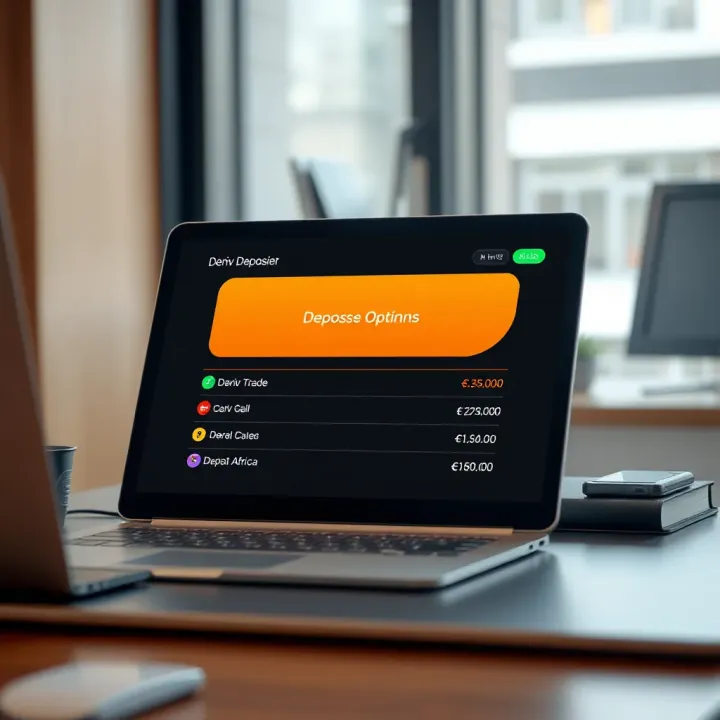
Learn how to make secure Deriv cashier deposits with local methods and currencies. Get tips for smooth transactions and quick troubleshooting in South Africa 💰🇿🇦

🚀 Ready to trade on Deriv.com? This guide helps South Africans register, verify accounts, fund them, and access local support for a hassle-free start. 💼
Based on 14 reviews