

Understanding Trading Platforms for South African Traders
Explore the key features and types of trading platforms tailored for South African traders 📊. Learn how to select the right platform while understanding local regulations 📈.
Edited By
Sophie Green
Understanding the Deriv cashier deposit system is essential for anyone trading or investing through the platform, especially South African users. Depositing funds smoothly and securely is the first step to engaging with financial markets without hiccups. The process is straightforward but knowing the available methods, currency options, and local banking nuances can save you time and avoid costly mistakes.
Deriv supports various deposit methods that suit South African clientele, including bank transfers, e-wallets, and card payments. Each method comes with its own processing times and fees, so choosing the right option depends on your priorities—whether you want speed, security, or low costs. For instance, using local bank transfers through major South African banks like FNB or Standard Bank generally means quicker clearance and avoids foreign exchange hassles.
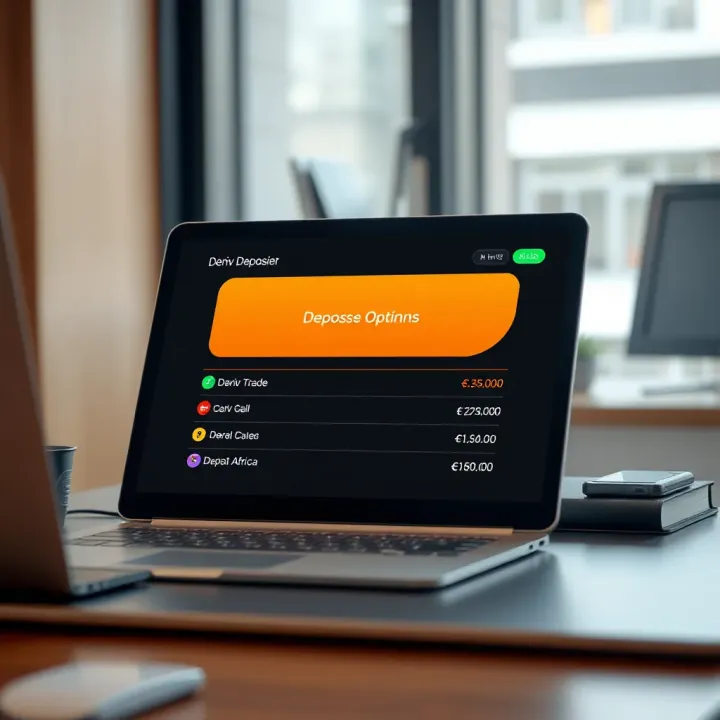
Always ensure your deposit currency matches your trading account's base currency or use Deriv’s currency conversion tools to avoid unexpected exchange rate markups.
Security plays a big role in cashier deposits. Deriv employs industry-standard encryption and complies with regulatory frameworks such as the Financial Sector Conduct Authority (FSCA). Users must also complete verification steps aligned with the Financial Intelligence Centre Act (FICA) to keep the transaction legal and secure.
If any hiccups occur, basic troubleshooting like confirming your banking details, rechecking deposit limits, and ensuring there’s sufficient balance can help. For more complex issues, Deriv’s support is available around the clock—usually quick to resolve common South African banking delays caused by robot malfunctions or network downtime.
To recap, South African users dealing with Deriv cashier deposits should:
Use local currency (ZAR) where possible to reduce forex and processing delays
Choose deposit methods that align with their cash flow and urgency needs
Complete all identity and source-of-funds checks to comply with FICA
Keep proof of deposits ready in case of dispute or delay
Getting this setup right from the start means you spend less time fretting about payments and more time focusing on your trading or investment strategy.
The Deriv cashier deposit system forms the backbone of funding your trading account efficiently and securely. For traders and investors active in South Africa, understanding this system is essential to ensure quick access to trading funds without unnecessary delays or hiccups. Whether you’re a beginner or have been trading for a while, this overview clarifies how deposits work, which methods you can use, and how these funds link seamlessly to your trading activities.
At its core, the cashier deposit function is Deriv’s way of handling incoming payments from clients who wish to add funds to their trading accounts. Instead of juggling multiple payment methods directly, Deriv centralises deposits through a cashier interface, simplifying the entire process. This means you interact with a single platform where all your deposit options are presented neatly, allowing smoother financial operations.
Practically, this function allows you to pick your preferred payment method, enter the amount, and initiate the deposit—all within your account space. This setup removes many typical barriers, such as needing to contact banks or payment providers separately, especially helpful during busy trading hours.
Integrating directly with Deriv trading accounts, the cashier deposit function ensures that once your payment is confirmed, funds reflect promptly in your trading balance. This instant or near-instant crediting is critical for timely participation in volatile markets where prices swing quickly. Imagine you spot an opportunity after a morning robot turns green—the faster your deposit clears, the sooner you can act.
Deriv supports a variety of deposit channels tailored to different user preferences and convenience.
Bank Transfers: This traditional method remains popular among South African traders preferring bank-to-bank transfers. With multiple local partner banks, you can use internet banking or mobile apps like FNB's banking app to move R1,000 or more directly into your Deriv account. Bank transfers generally take longer—usually a few hours to a day—depending on the bank.
E-wallets: Platforms like Skrill and Neteller are accepted, enabling quicker deposits with minimal fuss. These e-wallets store your payment details, so you avoid re-entering bank or card info each time. They are ideal for traders who like to keep their trading funds separate from their bank accounts.
Credit and Debit Cards: Visa and MasterCard are widely accepted for instant deposits, making them attractive for users wanting rapid account top-ups. Remember to check if your card provider allows international or online trading payments, as some South African cards may restrict these.
Cryptocurrency Options: For more tech-savvy traders, Deriv accepts cryptocurrencies such as Bitcoin or Ethereum. This method provides higher privacy levels and often quick transfers, although you need a crypto wallet and familiarity with exchanges. Plus, it sidesteps some local banking restrictions.
Choosing the right deposit channel depends on your urgency, convenience, and comfort with each payment method. For instance, if you want to top up your account while out in the veld with limited connectivity, crypto deposits might be handy. Alternatively, for everyday use, bank transfers or cards suit traders rooted in conventional banking.
Overall, the Deriv cashier deposit system offers flexible, straightforward options to keep your trading activities funded without stress, adapting well to South Africa’s unique financial landscape and payment habits.
South African traders using Deriv have a practical interest in how supported currencies and local payment options affect their deposits. Choosing the right currency and payment method can save time, cut down on extra costs, and simplify compliance with local financial rules.
Depositing in South African Rand (R) offers a straightforward option, especially for those who prefer to avoid currency conversion fees. When you fund your Deriv account in Rand, your deposit amount matches exactly what leaves your bank account or e-wallet, making it easier to track your trades and capital. For example, using a local bank like FNB or Standard Bank directly supports Rand deposits, reducing the chance of unpredictable exchange rate fluctuations.

While Rand is convenient, Deriv also accepts deposits in several foreign currencies, such as USD and EUR. This flexibility is useful for traders who operate in multiple markets or who want to hedge currency risks. However, depositing in foreign currency usually means your local bank or payment provider will convert your Rand to the chosen currency, which may involve additional fees or less favourable rates. Hence, it’s wise to compare these costs beforehand. Some traders opt for foreign currency deposits to align with the accounts they use for withdrawals, streamlining their financial management.
Conversion rates between Rand and foreign currencies can fluctuate significantly, impacting your actual deposit value. South African traders should keep an eye on the rand's value against major currencies and be mindful of extra bank charges for currency exchange. It’s also practical to consider payment methods that offer competitive conversion rates; for example, some e-wallets have better exchange terms than traditional banks. This can make a real difference, especially when depositing larger amounts.
Considering the full costs—exchange rates, conversion fees, and processing times—helps you avoid surprises and manage your funds efficiently.
Deriv supports deposits via major South African banking institutions, including Capitec, Nedbank, Absa, and FNB. This local integration means deposits can clear faster compared to international transfers, often within the same or next working day. Many users prefer Internet banking or Instant EFT (electronic funds transfer) methods, which are widely supported by these banks and typically carry lower fees.
Furthermore, mobile money solutions like SnapScan and Zapper also provide convenient deposit options. They integrate with local bank accounts, allowing traders to fund their Deriv accounts directly from their mobile wallets. This convenience is particularly helpful during loadshedding, when access to banking may be limited.
South Africa's widespread mobile market means some traders make deposits using prepaid airtime or mobile payments. While this method isn’t as common for online trading platforms, Deriv accommodates it through select payment channels. The advantage here is flexibility—you can deposit quickly without cash or a bank card nearby.
However, limits often apply to how much you can deposit via airtime, and fees may be slightly higher. For instance, if you’re using MTN or Vodacom prepaid balances, the transaction might cost more than a standard bank EFT. It’s wise to check these limits and fees in your payment method's terms to plan deposits better.
To sum up, understanding the nuances of supported currencies and local payment options equips you to make smarter decisions. It can speed up your transactions, reduce costs, and improve your overall trading experience on Deriv in South Africa.
Knowing exactly how to make a deposit through Deriv's cashier system can save you time and prevent unnecessary frustration. This guide takes you through the process, from logging in to confirming your funds are safely in your trading account. It’s especially relevant for South African users aiming for smooth transactions amid our local banking quirks and currency considerations.
Logging into your Deriv account is the first and critical step. Use your registered email and password to sign in securely. If you’ve forgotten your credentials, there’s a straightforward recovery process. Once logged in, your dashboard opens, displaying your account balance and options. Always ensure you’re on the official Deriv website to avoid phishing risks.
Next, navigating the deposits section is pretty intuitive but worth noting. From your dashboard, look for the cashier or wallet icon — clicking this brings up the deposit window. This area neatly categorises payment methods, helping you choose the option that suits your needs best. Clear labelling and straightforward menus reduce the chance of landing in the wrong section.
When selecting a payment option, consider your convenience and transaction speed. Deriv supports various channels like bank transfers, e-wallets, or even cryptocurrencies. For example, if you prefer local banks such as Standard Bank or FNB, you might choose the direct bank transfer option. E-wallets like Skrill or Neteller offer faster deposits but may come with slight fees.
Specifying the deposit amount involves entering the sum you want to fund your trading account with. Keep in mind the minimum and maximum limits set by both Deriv and your payment provider. For instance, if you enter R100,000 but the limit is R50,000, the system won’t process your deposit. Always double-check to save on delays.
Checking applicable fees and limits can prevent surprise charges. Some deposit methods charge a small fee, while others don’t. For example, crypto deposits generally have minimal transaction costs but might take longer depending on network traffic. Deriv usually displays any fees upfront, allowing you to make an informed choice before you commit.
Before sending money off, confirm your payment details — double-check the account number, payment method, and deposit amount. Mistakes here can cause your funds to be lost or delayed. Deriv also offers prompts that summarise these details before you finalise the deposit.
Processing time expectations vary. Bank transfers might take one to two business days, especially over weekends or public holidays common in South Africa. E-wallets usually credit instantly or within an hour. Understanding these timeframes helps you plan trades effectively without unnecessary waiting.
Finally, receiving confirmation and verifying account credit ensures your deposit was successful. Deriv sends a notification email or in-app message when your funds arrive. It’s wise to check your account balance right after this confirmation. If your deposit doesn’t reflect after the expected timeframe, contacting Deriv’s support with your reference number will help resolve issues promptly.
Taking each step carefully not only smooths your deposit process but also safeguards your investment capital from disappearances and delays. This practical approach keeps your trading momentum on point.
This guide is designed to make every deposit clear and hassle-free, giving South African traders confidence right from the start of their investment journey on Deriv.
When depositing funds on Deriv, ensuring your security and adherence to regulation is not just bureaucracy—it safeguards your money and personal details. Given the sensitivity of financial data, Deriv commits to strict protocols that aim to build trust and offer peace of mind to users, especially those operating in South Africa where local laws carry specific demands.
Deriv employs encryption technology to secure data exchanges. This means your transactions, account details, and identification documents are scrambled during transmission, making it near impossible for outsiders to intercept or decode the information. Imagine sending a letter in a locked, tamper-proof box instead of a plain envelope—that’s the essence of encryption here.
Besides encryption, Deriv ensures data protection through robust IT security frameworks, including firewalls and intrusion detection systems. These measures shield user data from cyber threats, which are not uncommon in online trading platforms. For South African users, whose banking information often links to mobile money or local banks, such safeguards prevent fraud and unauthorised access.
Recognising legitimate payment channels is equally vital. Deriv directs users to trusted and verified deposit methods, avoiding unofficial intermediaries or suspicious platforms that might appear as shortcuts but risk users’ funds and details. For example, while Vodacom or MTN mobile payments are common, users must ensure payments go through Deriv’s official portal, not a third-party website.
Using only the recognised payment channels protects you from scams and guarantees that your deposits reflect in your account without undue delay.
South African law requires platforms like Deriv to comply with the Financial Intelligence Centre Act (FICA). This involves verifying user identities through official documents like IDs or driver’s licences before allowing transactions. Such verification helps tackle fraud and money laundering, while users also benefit from enhanced transaction transparency.
Deriv’s adherence to FICA means South African traders must complete verification steps early, but this also smooths future deposits and withdrawals. It avoids frustrating delays or blocked accounts due to incomplete information. Practically, this means having your valid ID, proof of residence, and sometimes recent bank statements handy when registering or topping up your trading account.
Anti-money laundering (AML) measures are baked into Deriv’s operations to detect and prevent illicit funds from entering the system. They monitor irregular deposit patterns, unusually large sums, or discrepancies in client information. As an example, multiple deposits from unverified accounts or sudden high-value transactions will raise flags and trigger reviews.
For South African users, these AML checks help ensure the integrity of the trading environment and protect them from being inadvertently involved in illegal activities. It’s a layer of accountability that benefits both the trader and the platform, especially in a market where financial crime risks remain a concern.
In sum, understanding security and compliance on Deriv not only helps you deposit confidently but also reinforces safe trading practices tailored to South African regulatory standards.
Navigating the deposit process on Deriv can occasionally throw up a few hiccups. Understanding these common issues and knowing how to handle them can save time, reduce frustration, and ensure your funds reach your trading account promptly. This chapter focuses on practical solutions to the most frequent problems South African users encounter during deposits, making it easier to avoid delays or errors.
Checking payment status is the first step if your deposit hasn’t shown up after the expected processing time. Deriv usually provides a transaction ID or payment reference when you initiate a deposit. Use this to track the payment through your bank, e-wallet, or crypto wallet service. For example, if you paid via a local bank, logging into your internet banking portal lets you confirm whether the transaction was completed or is still pending clearance. This step can quickly clarify if the issue lies with the payment provider or Deriv’s processing.
Sometimes, deposits can take longer than usual due to external factors such as banking hours, public holidays, or loadshedding interruptions affecting service availability. Being aware of these helps set realistic expectations and avoid unnecessary concern.
Contacting support and required documentation comes next if you can’t trace the deposit or it remains uncredited beyond a reasonable period (usually 24 hours for most South African payment methods). Deriv’s support team can investigate the matter but will need specific information from you. This includes a screenshot or copy of the payment confirmation, deposit amount, payment method used, and your account details. Having these ready speeds up the investigation and resolution process.
Keep communications polite and clear, mentioning dates and reference numbers. This level of detail reduces back-and-forth and lets the support agent pinpoint the problem effectively, be it a processing glitch or mismatched payment details.
Confirming currency and limits before making your deposit prevents avoidable mistakes. Deriv supports multiple currencies, but depositing in the wrong currency can result in conversion fees or delays. For South African users, depositing in Rand (R) is usually smoother, but for those choosing USD or EUR, double-check bank or e-wallet settings to ensure the correct currency is sent.
Equally important is respecting the minimum and maximum deposit limits for each payment method. For instance, using a prepaid method with too small an amount might cause the deposit to fail. Always check Deriv’s cashier limits upfront to avoid rejected transactions.
Ensuring account verification is crucial to avoid deposit issues. Deriv complies with South African Financial Intelligence Centre Act (FICA) requirements, which means your account must be fully verified to process deposits and withdrawals. This includes submitting valid ID documents and proof of residence. Failure to complete verification can lead to deposit blocks or account restrictions.
Having your documents ready and uploading clear copies through the Deriv platform prevents delays and failed deposits. Plus, a verified account increases your security and trustworthiness within the system.
Taking a few careful steps before and after making a deposit can save hours of waiting and uncertainty. Using the right currency, checking limits, verifying your account, and promptly following up with support when needed all keep your trading experience on track.
Explore the key features and types of trading platforms tailored for South African traders 📊. Learn how to select the right platform while understanding local regulations 📈.

🤖 Learn how forex trading bots work, their pros and cons, and top platforms for South African traders. Manage risk wisely and stay compliant with local rules.

🚀 Ready to trade on Deriv.com? This guide helps South Africans register, verify accounts, fund them, and access local support for a hassle-free start. 💼
Discover what an RCG raw account 🇿🇦 means for South African traders. Learn how it works, its benefits, risks, opening tips, and your options.
Based on 6 reviews