

EUR/USD Forecast: Key Insights for Traders
📊 Stay ahead with our EUR/USD forecast offering sharp insights on economic trends, central bank moves, geopolitical risks, and technical analysis for savvy traders.
Edited By
Charlotte Hamilton
The EUR/JPY currency pair blends two key global economies: the eurozone and Japan. Investors and traders keep a keen eye on this combination since it offers clues about shifting economic tides and geopolitical developments that can ripple across markets.
This section sets the stage for understanding what moves EUR/JPY — starting with major economic indicators from both regions, examining price patterns via technical analysis, and considering geopolitical factors affecting confidence and risk appetite.
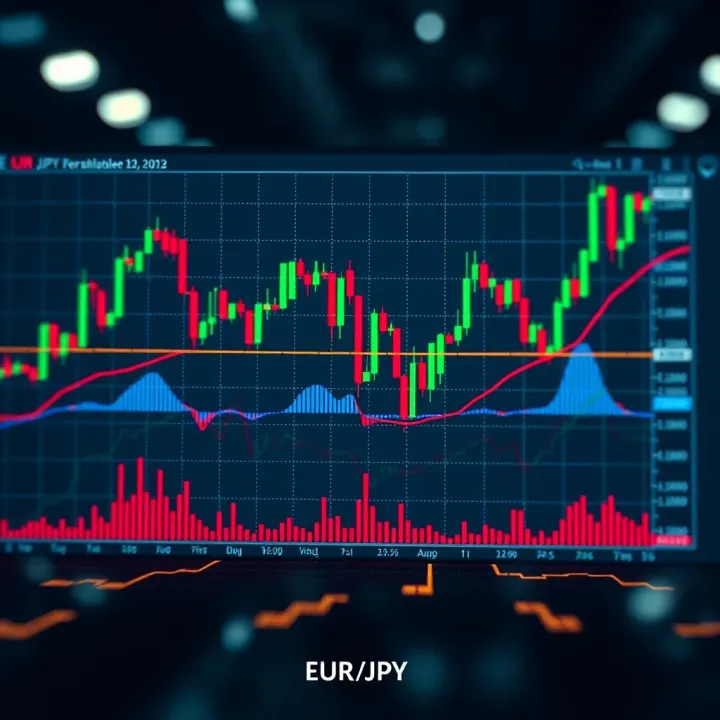
By focusing on measurable signals such as European Central Bank (ECB) policy decisions, Bank of Japan (BoJ) actions, inflation trends, and trade data, we narrow the noise and help readers follow realistic market trends. Plus, technical chart patterns can reveal support and resistance zones crucial for timing entries and exits.
Crucially, geopolitical developments—ranging from EU political shifts, trade tensions, to Japan’s relations with China and the US—add layers of complexity to EUR/JPY’s outlook. Combining these elements offers a balanced, practical foundation for South African traders and investors to understand this pair’s potential movements and risks.
Keeping a close watch on these factors helps you pivot quickly, which is important in the volatile world of forex trading.
ECB Interest Rate Decisions: Rate hikes or cuts significantly affect the euro’s value.
BoJ Monetary Policy: Japan’s ultra-loose stance can buoy or weigh on the yen.
Inflation Rates: Both regions' inflation impacts central bank moves and currency strength.
Trade Balances: Japan’s export-driven economy and the eurozone’s import/export shifts influence supply-demand dynamics.
Chart support and resistance levels often point to price barriers; for example, 140.00 has acted as a psychological resistance recently.
Moving averages and Relative Strength Index (RSI) readings provide momentum clues and overbought/oversold conditions.
EU political stability or strains from summits and policies
Japan's trade diplomacy amid regional tensions
Global risk mood shifts, often impacting safe-haven flows into the yen
Understanding these aspects offers a realistic, well-rounded starting point to forecast moves in the EUR/JPY pair effectively.
Grasping the nuances of the EUR/JPY currency pair helps traders and investors make sound decisions in an often unpredictable forex market. This pair reflects the exchange rate between the euro (EUR), widely used across Europe, and the Japanese yen (JPY), a major Asian currency. By understanding what shapes movements in this pair, you gain insight into broader economic trends and geopolitical shifts affecting both regions.
The euro’s value against the yen heavily relies on the health of the Eurozone's economy. Key drivers include GDP growth, industrial activity, inflation, and employment data in countries like Germany, France, and Italy. For example, stronger-than-expected manufacturing output in Germany often boosts the euro, signalling economic resilience. Conversely, sluggish consumer spending or rising debt levels in member states can weigh on the euro, nudging the EUR/JPY rate lower.
The European Central Bank (ECB) steers eurozone monetary policy, which profoundly impacts the EUR/JPY rate. Adjustments in interest rates, asset purchase programmes, or forward guidance shape investor expectations. For instance, if the ECB hints at tapering its bond-buying programme due to inflation pressures, this could strengthen the euro by attracting capital inflows. Traders should watch ECB announcements closely as surprise policy shifts often trigger sharp moves in EUR/JPY.
Japan’s economic performance and monetary policy also play a vital role. The Bank of Japan (BoJ) has maintained a ultra-loose stance for years to stimulate growth and inflation. When the BoJ signals continued low rates or yen intervention, it usually weakens the yen, pushing EUR/JPY higher. Additionally, Japan’s export data and demographic challenges affect investor sentiment. For example, a decline in export orders due to global trade tensions can drag on the yen’s strength.
EUR/JPY is known for relatively high liquidity given the prominence of its underlying economies, making it a favoured pair among forex traders. Liquidity peaks during overlapping European and Asian trading hours. However, volatility can spike during key economic releases or geopolitical events. For instance, sudden announcements on EU trade matters or unexpected BoJ moves often increase price swings, which both present risks and opportunities for active traders.
The pair attracts a mix of short-term speculators, swing traders, and longer-term investors. Day traders often exploit intraday volatility using technical strategies like moving average crossovers or RSI levels, while investors focus on fundamental trends such as shifts in ECB or BoJ policies. Some hedge funds might use carry trade strategies, borrowing in low-yielding yen to invest in euro assets offering higher returns. Understanding these behavioural patterns helps anticipate liquidity flows and market reactions.
Knowing what moves the EUR/JPY pair offers practical benefits: it guides timing of entry and exit points, helps manage risk, and enhances strategy adaptation to market rhythms.

By following economic signals, central bank stances, and market behaviour, traders can better navigate the EUR/JPY pairing and seize the right opportunities as they arise.
Understanding the key economic indicators that influence the EUR/JPY exchange rate is essential for traders and investors aiming to anticipate currency movements. These indicators provide insights into the strength and direction of both the Eurozone and Japanese economies, affecting demand and supply dynamics for the euro and yen.
GDP figures and industrial production data offer a clear snapshot of the Eurozone's economic health. For instance, consistent GDP growth signals resilience and supports euro strength, whereas sluggish or contracting output could weigh on the currency. Industrial production, reflecting manufacturing and factory output, adds further nuance, especially in countries like Germany where heavy industry is pivotal. Traders keep a close eye on quarterly GDP releases and monthly industrial reports from Eurostat to gauge momentum.
Inflation data helps reveal whether price levels in the Eurozone are rising within the target range set by the European Central Bank (ECB). Steady inflation around 2% often nudges the ECB to maintain or tighten monetary policy, which tends to bolster the euro. Wage trends, coupled with inflation, indicate underlying consumer demand and purchasing power. If wages rise faster than inflation, this could suggest stronger spending — a positive signal for economic growth, hence strengthening the EUR.
Employment rates provide direct evidence of economic robustness. High or rising employment typically supports euro demand as more people earn and spend. Conversely, rising unemployment can raise doubts about growth prospects. Consumer confidence complements this by reflecting how optimistic households feel about their finances and the economy, influencing spending habits. For example, if consumer sentiment dips amid rising joblessness, the euro might come under pressure as domestic demand falters.
Japan’s trade balance is a vital metric, especially as the country is a major exporter. A surplus suggests strong overseas demand and supports the yen, while a deficit can weigh on the currency. Manufacturing output affects this directly; after all, if factories churn out fewer goods, export volumes may shrink. Reports from the Ministry of Economy, Trade and Industry often drive attention on this front. Recent examples showed how a worsening trade deficit signalled yen softness against EUR.
Japan has struggled with below-target inflation for years. Any shift towards rising consumer prices often raises speculation about the Bank of Japan (BoJ) adjusting its long-standing ultra-loose monetary policy. Since the BoJ’s stance dramatically influences the yen’s value, even small inflation upticks or hints at tapering stimulus can lead to prompt currency moves. Interest rate expectations captured through market instruments offer clues on future policy adjustments — a critical focal point for EUR/JPY traders.
Japan’s ageing population and shrinking workforce remain structural challenges. These trends impact long-term growth potential and can inhibit inflationary pressures, keeping the yen relatively subdued. Meanwhile, government policy measures like fiscal stimulus or trade initiatives can sway market sentiment. For instance, recent government efforts to boost infrastructure spending and support industries during global slowdown phases can temporarily buoy the yen or temper its declines.
Staying updated with these economic indicators enables traders to align strategies based on solid data rather than guesswork, improving their chances in the EUR/JPY market.
Together, these economic signals shape the supply and demand for euros and yen, giving informed market participants an edge in predicting currency shifts and adjusting their positions accordingly.
Technical analysis plays a vital role in understanding the EUR/JPY currency pair’s price swings. It helps traders and investors spot trends, potential reversals, and entry or exit points without relying solely on economic news or political events. By studying price charts and applying certain tools, one can gain a clearer picture of market behaviour and make more informed decisions. This is especially useful in a pair like EUR/JPY, where volatility can be influenced by distinct factors from both Europe and Japan.
Support and resistance levels refer to specific price points where the currency tends to pause or reverse direction. Support acts like a floor holding the price up, while resistance serves as a ceiling it struggles to break through. For example, if EUR/JPY repeatedly drops to 130.50 and bounces back, that level becomes a support zone. Conversely, if it keeps testing 133.00 but fails to rise above, that marks resistance. These levels often attract many trades and can predict where the price might stall or reverse, making them invaluable for setting stop-losses or targets.
Moving averages and trend lines help smooth out the erratic price moves by averaging recent prices over a set period. A common approach is to watch the 50-day and 200-day moving averages for crossovers, which can signal trend shifts. For instance, if the EUR/JPY’s 50-day average crosses above the 200-day line, it might indicate a bullish trend forming. Traders also draw trend lines connecting successive highs or lows to assess the pair’s direction and strength. These give a quick visual guide on whether momentum is building upward or downward.
Relative Strength Index (RSI) measures how quickly the price has moved in recent periods, highlighting whether the pair is overbought or oversold. An RSI above 70 typically suggests EUR/JPY might be overbought and due for a pullback, while below 30 indicates oversold conditions, hinting at a possible bounce. For example, if the pair spikes rapidly after a Bank of Japan surprise, RSI can flag exhaustion in buying pressure before prices start retreating.
MACD analysis (Moving Average Convergence Divergence) tracks momentum by comparing short-term and long-term moving averages. When the MACD line crosses above its signal line, it often marks a bullish signal; the opposite is bearish. This tool is handy in confirming trends shown by price action or spotting early reversals. In volatile times, such as during Eurosceptic elections or geopolitical tensions in Asia, MACD can offer clarity amid mixed market signals.
Fibonacci retracement levels are derived from key ratios found in nature and markets, indicating likely areas where price might retrace before resuming the trend. Traders apply these levels between significant highs and lows to anticipate pullbacks. Suppose EUR/JPY surges from 128.00 to 134.00; the 38.2%, 50%, and 61.8% retracements could serve as support spots if the price falls back. These levels assist in planning entries or exits with high probability targets.
Technical tools like support and resistance, moving averages, RSI, MACD, and Fibonacci retracements provide a structured framework. They help cut through noise and offer practical signals in navigating the EUR/JPY’s complex movements.
Using these techniques alongside understanding economic and geopolitical drivers can give traders a more rounded outlook, essential for success in the dynamic currency market.
Geopolitical and global events greatly influence the EUR/JPY exchange rate, shifting market sentiment and trading flows. Knowing how trade agreements, diplomatic relations, and global risk appetite affect this currency pair can help traders anticipate moves better, especially in volatile times. Since both the euro and yen are tied to major economies, the currency pair tends to react sharply to shifts in international relations and economic diplomacy.
The EU-Japan trade agreements have laid a solid groundwork for smoother commerce between the two regions. The Economic Partnership Agreement (EPA), effective since 2019, reduced tariffs on many goods and created clearer regulations, benefiting exporters and importers alike. For instance, South African businesses sourcing machinery parts from Japan through Europe could see steadier pricing and supply. This steadiness tends to strengthen the euro against the yen when trade conditions improve, as investors perceive a win-win for both economies.
Diplomatic stability between the EU and Japan also reduces uncertainty in the markets. Major political summits and trade talks often cause short-term currency moves, but sustained cooperation fosters investor confidence. For traders, key announcements or delays in implementing agreements can provide entry or exit points, since such news directly affects demand for both currencies.
Global trade tensions and tariffs, especially those involving China, the US, and the EU, create ripple effects on EUR/JPY. For example, Eskom-stage loadshedding in South Africa might delay manufacturing shipments tied to global value chains, but on a broader scale, tariffs imposed by the US or China can disrupt supply chains, pushing investors toward safer assets like the yen. The February 2024 spike in tariffs on certain tech products led to temporary yen strength as traders sought refuge amid uncertainty.
Understanding these trade friction impacts helps traders avoid surprises. Sudden escalations can trigger a flight to quality, while easing tensions often support euro gains by boosting risk appetite.
The safe-haven flows into the yen are a defining feature affecting EUR/JPY moves. In times of global stress—be it geopolitical conflicts, financial crises, or pandemics—investors flock to the yen due to Japan’s traditionally stable and low-risk financial environment. Take the recent market jitters around Eastern European tensions; the yen appreciated sharply as traders sought protection. This behaviour often pushes EUR/JPY lower during such episodes.
For practical trading, monitoring global news and risk triggers can alert investors about potential yen strength. Timing buys and sells around these risk-off events is crucial for managing exposure.
The euro’s sensitivity to global risk events often contrasts with the yen’s role. Whereas the yen benefits from risk-averse sentiment, the euro usually weakens when uncertainty hits emerging markets or the global economy. This is noticeable during European political challenges or economic surprises that reduce appetite for risk.
South African traders should note that external shocks—like abrupt changes in US interest rate policy or sudden shifts in commodity prices—can influence EUR/JPY indirectly through altering risk sentiment. Following global headlines and their immediate impact on market mood provides clues to anticipate euro and yen strength shifts.
Staying alert to geopolitical news and global risk factors offers a clearer view of EUR/JPY direction. Knowing when traders lean into safety or risk can guide smarter, timely decisions.
Watch for trade agreement updates and diplomatic talks.
Track global tariff developments and trade tensions.
Note risk-off episodes that boost demand for the yen.
Assess European political and economic signals affecting the euro.
Understanding this section can make a meaningful difference when positioning in EUR/JPY amid a fast-changing global backdrop.
Understanding the practical outlook and strategies for the EUR/JPY currency pair is critical for traders aiming to navigate its often unpredictable movements. This section focuses on providing clear, actionable advice that helps you manage risk, identify trading opportunities, and protect your capital. Unlike pure analysis, these strategies bridge theory and practice — assisting you in making informed decisions amid fluctuating market conditions.
The EUR/JPY pair currently experiences moderate volatility influenced largely by divergent monetary policies. The European Central Bank (ECB) is moving towards tightening, while the Bank of Japan (BoJ) maintains its ultra-loose stance. This divergence tends to support a gradual upward trend for the euro against the yen. However, geopolitical events and global risk sentiment still exert a strong pull, causing sudden shifts in price. Traders should expect ranges between 140.00 and 145.00 in the near term, with potential breakouts if inflation data or trade tensions heat up.
Managing volatility involves recognising that EUR/JPY can be prone to sharp moves, especially around news releases or unexpected global developments. To manage this, keep position sizes small when volatility spikes. For example, during a surprise ECB policy announcement, price swings can rapidly widen, so it helps to reduce exposure or temporarily step back. Volatility also means wider spreads and higher potential slippage, so trading during peak liquidity hours (e.g., London or Tokyo sessions overlapping) can help keep costs in check.
Timing entries and exits is about picking moments when technical and fundamental factors align. Wait for confirmation signals like bouncing off a key support level or a MACD crossover before entering trades. Sudden news items or shifts in risk appetite often prompt quick reversals, so avoid chasing moves. Exiting trades should consider both profit targets and recent volatility. For instance, locking in gains near resistance around 144.50 is prudent if the broader uptrend looks shaky.
Using stop-loss orders effectively is crucial to protect your trading capital from unexpected reversals. Place stop-loss orders at logical technical levels, such as below a recent swing low or outside key trend lines. This reduces the chance of being stopped out prematurely by ‘market noise’. In volatile phases, consider using wider stops combined with smaller position sizes to balance risk. Setting these orders automatically also removes emotion from decisions during fast market moves. Remember, a well-placed stop loss helps you stick to your trading plan and keeps losses manageable.
Successful trading with EUR/JPY demands blending careful analysis with disciplined risk controls. Consistent application of risk management tends to separate winning traders from those caught off guard by sudden market swings.
By focusing on these practical aspects — managing volatility, timing your trades, and using stops wisely — you set yourself up for steadier results in the EUR/JPY market despite its inherent unpredictability.
📊 Stay ahead with our EUR/USD forecast offering sharp insights on economic trends, central bank moves, geopolitical risks, and technical analysis for savvy traders.
💷📉 Get insights on the British Pound to South African Rand exchange rate, trends, key economic factors, and expert forecasts to guide your currency decisions.

📉 Explore the latest South African Rand (ZAR) to Indian Rupee (INR) exchange trends, key influences, and practical forecasts for investors and travelers alike.

Understand Rand to INR exchange rate trends 📉📈. Discover economic, political factors, expert forecasts, and smart tips to manage currency risks effectively 💹💡.
Based on 12 reviews