

TD Markets Review for South African Traders
Explore TD Markets in detail for South African traders 🇿🇦. Platform features, account types, fees, and regulation to guide your trading choices. 📈💼
Edited By
Thomas Hughes
Deriv has steadily gained traction among South African traders looking for a flexible and accessible online trading platform. It offers a variety of trading instruments, from forex and commodities to synthetic indices, which mimic real-market behaviours but run 24/7 without market closures.
This broker targets both novices and experienced traders by providing multiple account types and user-friendly platforms. Deriv’s offerings are particularly relevant in South Africa, where access to diverse markets and competitive fees play a critical role in picking a trading partner.
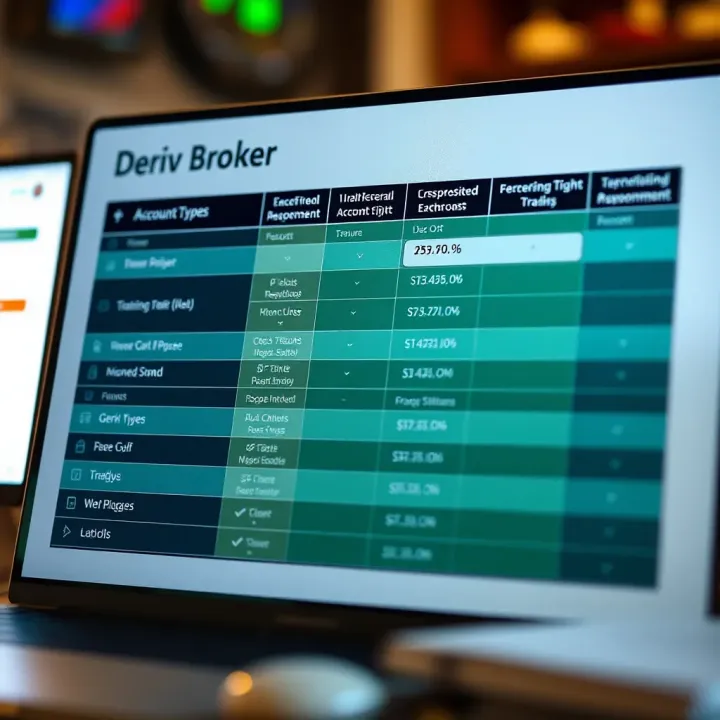
Deriv's combination of low fees, variety in assets, and ease of account funding makes it a noteworthy option for local traders who want straightforward access to global markets.
South African traders can open accounts in ZAR, avoiding unnecessary currency conversion charges which is a big plus given the rand’s occasional volatility. It's also worth noting that Deriv supports deposits and withdrawals via popular local methods including bank transfers, e-wallets like Skrill and Neteller, and even cryptocurrencies.
The trading platforms on offer range from the simple Deriv Go app, ideal for beginners, to DTrader and DBot, which provide more advanced charting and automated trading features. This caters well to traders who want to scale up their strategies without switching brokers.
Deriv is regulated in various jurisdictions, but South African traders should keep in mind that it is not directly supervised by the Financial Sector Conduct Authority (FSCA). That means traders need to carefully weigh the pros and cons, especially regarding investor protection and dispute resolution.
Overall, Deriv presents itself as a versatile broker with user-friendly tools and options tailored for South African needs. This review will explore its fee structures, account types, regulated status, and asset range to help you decide if it’s the right fit for your trading ambitions.
Understanding the basics of Deriv broker is fundamental for South African traders aiming to make smart trading choices. This section offers a clear view of who Deriv is, their roots, and how they ensure safety and trust for clients down here and abroad. Knowing the company’s background provides insights into their experience and reliability, which can influence your peace of mind when you invest your hard-earned rand.
Deriv started as a rebranding of Binary.com, a platform that has served traders for over two decades. It’s grown from simple binary options into a versatile offering with multiple trading products and platforms aimed at various skill levels. For example, a Johannesburg-based trader might appreciate Deriv’s evolution because it reflects adaptation to changing financial markets, giving access not just to forex and commodities but also to digital options and synthetics.
The company operates internationally, with offices in key financial centres. Its history shows steady growth, partly because it embraced technology early on, developing web-based platforms that don’t need heavy installations. This makes Deriv accessible, especially where tech setups differ, such as in some parts of South Africa where broadband can be patchy.
Regulation forms the backbone of trust in any broker, and Deriv is no exception. The company holds licences from multiple regulatory bodies, including the Malta Financial Services Authority (MFSA) and the Vanuatu Financial Services Commission, among others. Although South Africa’s Financial Sector Conduct Authority (FSCA) does not currently regulate Deriv, the broker’s compliance with international standards offers a layer of confidence for local traders.
Moreover, Deriv employs strong security protocols such as two-factor authentication and SSL encryption to protect user accounts and data. Traders from South Africa should note that client funds are kept in segregated accounts, adding another level of protection in case of financial difficulties. This setup means your deposits aren’t mingled with the company's operating funds, lowering risks.
For South African traders, a broker’s safety net isn’t just about regulations but also about practical security features and transparent fund management.
All told, getting familiar with Deriv’s background and regulatory posture helps South African traders understand the strengths and limitations of the platform. This awareness can guide your decisions on whether Deriv fits your trading style and security expectations.
Understanding the different account types and the opening process is vital for anyone considering Deriv as their broker, especially South African traders. Choosing the right account can shape your trading approach, risk management, and access to various features. Moreover, knowing how to open an account smoothly, along with the necessary verification steps, ensures you start trading without delays or complications.
Deriv offers several account types tailored to diverse trading needs. For example, the Deriv MT5 account caters to traders who prefer MetaTrader 5, a widely used platform supporting forex, commodities, and indices. This account suits those seeking advanced charting tools and expert advisors.
Then there is the Deriv DTrader account, which focuses on options trading with a more straightforward interface, ideal for beginners or those favouring simpler trades. Another choice is the Deriv DX account, tailored for traders wanting to engage with synthetic indices and CFDs (contracts for difference).
The availability of demo accounts across all types lets you practise without risking real money. This feature is handy for South African traders learning the ropes or testing strategies before committing capital.
Opening a Deriv account from South Africa is straightforward and mostly digital. You start by visiting Deriv’s website, selecting your preferred account type, and filling in your personal details such as name, email, and contact number.
South Africans should ensure they provide accurate information as it affects verification later on. Also, Deriv supports multiple deposit options, including local debit cards, e-wallets like Skrill and Neteller, and cryptocurrency transfers, making funding your account convenient despite Rand’s relative volatility.
Deriv enforces strict verification to comply with international regulations and prevent fraud. South African clients will need to submit:
A clear copy of a valid ID document, such as a South African ID book, smart ID card, or passport
Proof of residence, typically a recent utility bill or bank statement (no older than three months)
Occasionally, proof of funding source if deposit amounts trigger compliance checks
The verification process usually completes within 24-48 hours, allowing you to start trading without unnecessary delays.
Completing verification upfront helps avoid hassles when you want to make withdrawals or increase deposit limits later.
In short, Deriv’s account options provide flexibility for various trader profiles, while the opening and verification processes are user-friendly for South Africans, ensuring a smooth path into online trading.

Trading platforms and tools are the backbone of any broker’s offering, shaping how traders interact with markets and manage their strategies. For South African traders, who often balance time zones, data costs, and the impact of loadshedding, having reliable platforms that are responsive and packed with useful features is vital. Deriv provides several platforms, each designed to cater to varying experience levels and trading preferences.
Deriv offers four main platforms: DTrader, DBot, DMT5, and SmartTrader. DTrader is user-friendly, suitable for beginners looking to trade forex and CFDs without too many bells and whistles. DBot stands out by allowing traders to automate strategies without coding knowledge, using a drag-and-drop interface — a handy feature if you want to keep an eye on your trade while you’re at work or on the move.
DMT5 is the platform that most seasoned traders lean towards. It’s based on MetaTrader 5, which is globally popular for its customisability and advanced features. It supports a wide range of assets, from forex pairs to commodities. SmartTrader simplifies binary options trading with a clean interface and useful features like expiry times and automatic payouts, which is good for traders who prefer shorter-term opportunities.
Deriv’s mobile apps bring their platform offerings to smartphones with minimal compromise on functionality. Whether you use Android or iOS, the apps allow you to place, monitor, and close trades efficiently. This is a big plus in South Africa, where many traders rely on mobile data and need quick access without being tied to a PC.
The mobile platforms support real-time pricing, customisable layouts, and simple navigation. Plus, the apps handle deposits and withdrawals, so you can manage your funds without switching devices. However, heavy charting or complex strategy building is best reserved for desktop, as screen size limits usability.
Good charting and analysis tools help traders spot trends and make informed decisions rather than guessing. Deriv’s DMT5 platform is rich in this regard, offering multiple chart styles (candlestick, bar, line), dozens of indicators like RSI and Bollinger Bands, and drawing tools for marking support or resistance levels.
For example, during volatile rand-dollar swings, being able to quickly analyse momentum or price patterns could help you decide when to enter or exit trades. DBot also integrates some analytical capabilities by letting traders set conditions that mimic these indicators in their bots.
Having access to flexible, powerful tools directly on the trading platform saves you from juggling between third-party software and keeps your trading process streamlined, especially when South African traders want to react quickly to market news or loadshedding interruptions.
In summary, Deriv’s platforms combine accessibility, automation options, and analytical strength, making them well-suited for a range of South African traders. Whether you’re just starting or looking to refine your edge with robust analysis, these tools can support your trading needs effectively.
Choosing a broker with a broad selection of tradable assets is vital for South African traders looking to build diverse portfolios and respond to shifting market trends. Deriv offers an extensive range that covers major categories like forex, indices, commodities, and cryptocurrencies, along with some distinctive products designed to cater to different trading strategies and risk appetites.
Deriv provides access to a solid range of forex pairs, including the popular majors such as EUR/USD, GBP/USD, and USD/ZAR, which is crucial for South African traders keen on currency movements involving the Rand. These pairs offer tight spreads and leverage options suited for both beginners and experienced participants.
On the indices side, Deriv covers major global indices like the US 500 (S&P 500), UK 100 (FTSE 100), plus emerging market indices. Indices trading can be attractive during uncertain times because they offer exposure to a basket of shares rather than a single company, reducing company-specific risk.
Commodity offerings include staples such as gold, silver, oil, and natural gas. Gold and silver particularly resonate with local traders as safe-haven assets during rand volatility or international uncertainty. These commodities also align well with South Africa’s mining heritage and investor interest.
As for cryptocurrencies, Deriv supports many of the big players—Bitcoin, Ethereum, Litecoin, and Ripple. Crypto trading is popular among South Africans despite the regulatory grey areas, and Deriv’s platform offers straightforward access with competitive trading conditions.
What sets Deriv apart is its unique products like synthetic indices, which simulate real market volatility but trade 24/7, independent of underlying markets. These are especially handy during Eskom loadshedding or local market closures, allowing continuous trading opportunities at any hour.
Additionally, Deriv offers multipliers and vanilla options tailored for traders wanting specific pay-off profiles or defined risks. These products let traders target specific market moves with capped losses, a useful feature for those cautious about exposure in volatile conditions.
A diverse asset range, including unconventional offerings, allows South African traders to adapt their strategies according to market hours, volatility, and risk levels, providing a practical edge in managing investments.
In summary, Deriv’s breadth of tradable assets covers the essentials expected by South African retail and professional traders alike. Combining traditional categories with special products, it presents opportunities to diversify and navigate the local and global financial environment with flexibility.
Understanding costs, fees, and spreads is vital when choosing a broker like Deriv. These factors directly influence your bottom line, especially if you trade regularly or with larger amounts. South African traders should pay close attention not only to the headline fee structure but also to less obvious charges that may add up over time.
Deriv offers mostly commission-free trading on many of its assets, relying primarily on spreads to cover costs. Spreads represent the difference between the buy and sell price of an asset—think of them as a built-in fee. For example, when trading forex pairs like EUR/USD or ZAR/USD, expect spreads to hover around 1.2 to 2.0 pips depending on market volatility. This is fairly competitive when compared to brokers focusing on South African traders.
On certain products, such as synthetic indices or options, Deriv’s spreads might be wider due to their volatile nature. While no explicit commission applies to forex or commodities, traders should consider spread widening during peak hours or market news events, which can increase trading costs unexpectedly.
Deriv supports various deposit and withdrawal methods convenient for South Africans, including bank transfers, e-wallets, and cryptocurrencies. Deposits usually come without extra fees, which is a big plus if you’re topping up your account often. Withdrawals, on the other hand, sometimes incur a small fee depending on the payment method used. For instance, withdrawing via bank transfer may attract a fixed fee of around R50 to R100 in some cases, particularly for cross-border transactions.
It’s important to note that while Deriv does not charge inactivity fees on deposits or withdrawals, the payment provider or your own bank may levy their costs. Always double-check your payment method’s fine print to avoid surprises.
Deriv charges overnight fees for positions held open past a certain time, usually linked to the underlying asset's active hours. For forex, this rollover fee varies by currency pair and prevailing interest rate differentials. As an example, holding a USD/ZAR position overnight might cost a small fee calculated daily, which traders need to factor in if they plan longer-term trades.
Inactivity fees apply if your account stays dormant for a continuous period, typically after 90 days without trading or deposits. In such cases, a monthly fee of around R200 might be deducted until activity resumes or the balance reaches zero. This encourages traders to stay engaged or close accounts no longer in use, but it can catch out the occasional or seasonal trader.
When picking Deriv, make sure to keep an eye on spreads, monitor the timing of your trades, and factor in withdrawal fees related to your chosen payment method. Costs might seem small individually but can mount up over time, especially for active traders.
In short, Deriv’s cost structure is transparent and fairly competitive for South African traders, but understanding the nuances of fees and spreads will help you manage your trading budget wisely.
Quality customer service is a solid pillar for brokers, especially for traders in South Africa dealing with market volatility and occasional network issues. With time zones and local trading hours to consider, having responsive assistance can save you from missed opportunities or costly mistakes. Deriv’s support services are designed to offer practical help when it matters — whether it’s technical glitches, account queries, or trading guidance.
Deriv offers multiple ways to get in touch, which is crucial if you need quick help during active trading sessions. They provide:
Live chat, accessible via their website and trading platforms, offering real-time responses for urgent matters.
Email support, suitable for less time-sensitive questions or documentation requests.
Phone support, available during business hours, giving traders a direct line when more detailed assistance is required.
Help centre and FAQs, loaded with guides and answers, so you can resolve common questions without waiting.
For South African traders, the live chat stands out as especially useful, since it operates 24/7 and avoids any need for excessive calling charges. Plus, the email option works well when you have queries about deposits, withdrawals, or regulatory documentation.
Traders often comment on Deriv’s relatively swift response through live chat — messages often get answered within a few minutes. This quick turnaround is particularly valuable when market conditions are changing fast. For instance, if your trade platform freezes or you experience unexpected account issues, being able to connect swiftly prevents unnecessary losses.
The quality of assistance tends to be thorough and practical. Support agents are knowledgeable about South African regulatory nuances, such as RICA (Regulation of Interception of Communications and Provision of Communication-Related Information Act) requirements, and are able to explain verification processes clearly. They also help clarify fees or trading conditions, which avoids surprises later on.
Fast and clear communication with support can make or break your trading experience, especially during busy market periods or times of technical hiccups.
In summary, Deriv shows a commitment to accessible and effective customer support. South African traders benefit from this setup, ensuring they’re not left in the dark and can keep focus on trading rather than troubleshooting. It’s wise, though, to test these channels yourself early on, just to be sure they match your expectations for responsiveness and clarity.
Assessing the overall fit of Deriv for South African traders is key before tying your money up. This final evaluation balances offerings like account types, platform usability, fees, and regulatory compliance—elements that shape your everyday trading experience. Given South Africa’s unique regulatory environment and challenges such as fluctuating exchange rates and periodic loadshedding, choosing a broker that understands these specifics pays off.
Deriv offers several strong points for SA traders:
Varied account options, including demo accounts and micro-lot trading, suit beginners and experienced traders.
Access to multiple asset classes such as forex, commodities, and cryptocurrencies.
User-friendly platforms with solid charting tools and mobile app support.
Competitive spreads and no hidden fees for deposits and withdrawals.
On the downside:
Limited South African-specific payment methods can slow funding.
No direct B-BBEE recognition or local office, which might concern corporate traders looking for local representation.
Customer support primarily in English and off-peak response times can be a minor hurdle for non-native speakers or those trading irregular hours.
Deriv competes well with established names like Plus500, IG, and FP Markets, particularly on cost and asset diversity. For example, FP Markets offers more CFDs on shares, tailored to South African stocks, whereas Deriv’s strength lies more with synthetic indices and forex pairs. Plus500 is popular for its intuitive interface, but Deriv matches or exceeds that with its proprietary platforms.
Unlike some brokers that require minimum deposits of around R5,000, Deriv allows smaller entry points, making it more accessible. However, brokers such as IG hold more local regulatory licences which might offer greater peace of mind for some traders.
Deriv fits traders who:
Want flexibility across asset classes without hefty minimum deposits.
Prefer easy demo access to test strategies before committing real funds.
Are comfortable trading on digital platforms that are straightforward but offer advanced charting.
Cautiously, those who rely heavily on local deposit methods or value in-person support might find Deriv less ideal. Also, institutional traders needing intricate compliance support or B-BBEE benefits could have better options elsewhere.
For South African traders weighing convenience against local nuances, Deriv presents a solid choice—especially for retail traders prioritising cost-effective, versatile, and secure trading environments.
Choosing the right broker involves weighing these practical aspects against your personal trading style and needs. Deriv’s offering suits many, but not all, which is the key takeaway here.
Explore TD Markets in detail for South African traders 🇿🇦. Platform features, account types, fees, and regulation to guide your trading choices. 📈💼
Explore RoboForex account types in detail 📊. Find the best one for your trading style in South Africa 🇿🇦 and boost your trading experience today!

Explore how Robotrader APK works, install it safely, and get tips tailored for South African traders. Learn risks and benefits for smart trading 📈🇿🇦
💼 South African traders: Discover RCG's minimum deposit details, account types, and how they compare with other brokers for smarter investment choices.
Based on 7 reviews