

QX Broker Review for South African Traders
Explore QX Broker’s trading platforms, services, account options, and regulations fit for South African traders. Make informed choices with this guide 📈💼
Edited By
Amelia Foster
Setting up as a Deriv broker in South Africa requires more than just opening an office and calling it a day. You need to navigate a range of legal and regulatory hoops to operate legitimately and build trust with clients. This includes understanding the licensing requirements, complying with financial regulations, and putting together the necessary paperwork.
Deriv broker registration involves aligning with South African financial laws as well as international standards, especially when your operations reach beyond local borders. The process ensures brokers manage risks effectively and safeguard client funds. Without proper registration, a broker risks legal trouble and losing credibility within the trading community.
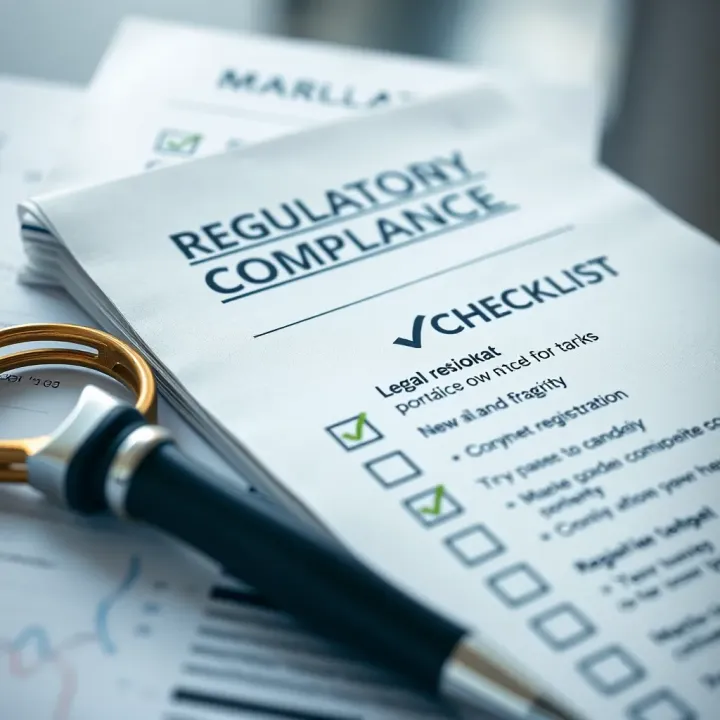
Registration isn’t merely a box to tick; it’s foundational to building a reliable and secure brokerage business.
In South Africa, financial services and product providers must register with the Financial Sector Conduct Authority (FSCA). The FSCA oversees the market conduct of brokers to protect investors and maintain fair trading practices. Beyond FSCA, brokers need to consider the Protection of Personal Information Act (POPIA) for handling client data responsibly.
Proof of Financial Soundness: Evidence that the broker has sufficient capital and risk management systems.
Fit and Proper Assessments: Background checks to verify the integrity and competence of directors and key personnel.
Compliance Policies: Clear procedures for anti-money laundering (AML), combating the financing of terrorism (CFT), and know-your-client (KYC) protocols.
Valid Business Documentation: Registration documents from the Companies and Intellectual Property Commission (CIPC), tax compliance certificates from SARS, and more.
Once registered, brokers must maintain good standing with ongoing compliance. This includes submitting regular reports to the FSCA, keeping client funds segregated, and ensuring staff training on regulatory updates. Practical measures like back-up systems to handle Eskom loadshedding and secure IT infrastructure are vital, especially as many clients expect seamless digital platform access.
Understanding these requirements helps you prepare for the registration process with clarity and confidence. We’ll explore each step in detail, giving you the practical knowledge needed to launch and sustain a successful Deriv brokerage in South Africa and beyond.
Understanding what Deriv broker registration entails is the first step for anyone keen to step into the financial services space as an intermediary. Deriv brokers act as a bridge between clients and the trading platform operated by Deriv, offering access to various financial products including forex, commodities, and indices. Registering as a Deriv broker isn’t just ticking a box — it establishes your business as a legitimate and compliant player, which reassures clients and regulators alike.
Deriv is an online trading platform that provides access to diverse financial markets. Brokers affiliated with Deriv perform multiple tasks: they onboard clients, facilitate trades, and offer customer support. Think of a broker as a local guide taking clients through the sometimes complex world of online trading — helping new traders navigate the platform and assisting experienced ones in managing their portfolios effectively.
The broker's role extends beyond mere client interaction. They often provide educational resources, help with risk assessment, and sometimes tailor trading solutions to fit client needs. In South Africa, where trust in financial intermediaries depends heavily on regulatory oversight, brokers have to prove their credentials before they can operate.
Registering as a Deriv broker isn’t merely about meeting legal obligations; it’s also a badge of trustworthiness. A registered broker must comply with stringent regulations set by financial authorities such as the Financial Sector Conduct Authority (FSCA). This ensures they adhere to laws around client protection, anti-money laundering (AML), and verification processes under the Financial Intelligence Centre Act (FICA).
Consider a trader in Johannesburg looking for a reliable broker. Seeing that a broker is registered and compliant with local rules can make or break their choice. It’s like buying meat from a butcher you know adheres to health and safety standards — legitimacy offers peace of mind.
Moreover, becoming a registered Deriv broker opens the door to formal banking relationships, easier access to payment gateways like SnapScan, and reduces the risk of falling foul of compliance audits. Without registration, brokers risk hefty fines, legal action, or even being shut down.
Registration is not just a legal formality – it’s the foundation for building a credible business and sustaining client confidence in a competitive market.
In summary, Deriv broker registration matters because it defines who can officially mediate trades on the platform, protects the interests of traders, and upholds the integrity of the financial system. For anyone aiming to enter this space in South Africa or elsewhere, understanding the registration process and its benefits is absolutely key.
Understanding the regulatory environment is fundamental for anyone looking to register as a Deriv broker. The landscape shapes how brokers operate, ensuring they follow laws designed to protect investors and maintain market integrity. Navigating this terrain involves recognising which authorities hold sway, how international standards might apply, and the compliance demands placed on brokers locally and beyond.

In South Africa, the Financial Sector Conduct Authority (FSCA) oversees the regulation of financial services providers, including brokers. Deriv brokers must engage with the FSCA to ensure they comply with the Financial Advisory and Intermediary Services (FAIS) Act. This includes meeting fit-and-proper criteria and maintaining proper licence status. Failing to do so can lead to hefty penalties or suspension of operations.
Besides the FSCA, the South African Reserve Bank (SARB) plays a role, especially where trading involves cross-border transactions or foreign currency dealings, which may trigger exchange control requirements. Brokers must also be mindful of the Companies and Intellectual Property Commission (CIPC) registration rules to legally operate within the country.
Deriv brokers are not confined by South African borders alone; global market participation calls for adherence to international regulations. Regulators such as the UK’s Financial Conduct Authority (FCA) or Australia’s ASIC set standards that often influence local practices, especially when brokers serve clients beyond SA.
For example, if a Deriv broker attracts clients from Europe, compliance with the European Union’s Markets in Financial Instruments Directive (MiFID II) becomes relevant. This might require adjustments in reporting standards and client protection mechanisms. Brokers should regularly review such regulatory frameworks to anticipate changes that impact their day-to-day operations and ensure cross-border licence validity.
South Africa’s Financial Intelligence Centre Act (FICA) demands strict compliance to prevent money laundering and terrorist financing. Deriv brokers must implement thorough Know-Your-Customer (KYC) procedures—verifying client identities through reliable documents like South African IDs or passports and proof of address such as municipal bills.
This involves continuous monitoring of transactions and reporting suspicious activity to the Financial Intelligence Centre (FIC). Ignoring FICA obligations risks penalties and reputational damage, as well as legal action. Practical compliance also means staff training and updating internal systems to detect risks effectively.
Brokers who neglect regulatory guidelines put their business and clients at significant risk. Staying informed and compliant is not just a legal requirement but a cornerstone of trust and credibility in the financial services sector.
In sum, understanding the regulatory landscape is more than ticking boxes. It’s about embedding responsibility and transparency within your brokerage to build a sustainable operation that clients and regulators can rely on.
Registering as a Deriv broker is a process that demands careful preparation and attention to detail. This section breaks down the practical steps involved, focusing on what you need to have ready and how to navigate the application smoothly. Understanding these steps helps avoid common pitfalls and speeds up your entry into the brokerage market.
Identification and proof of address are fundamental for confirming your identity and physical location, crucial for regulatory compliance. In practice, this means having a valid South African ID or passport, along with recent utility bills or bank statements showing your residential address. These documents prevent fraudulent registrations and ensure traceability, which is vital in finance.
Business registration documents confirm your entity’s legal standing. You'll need to provide certificates from the Companies and Intellectual Property Commission (CIPC) confirming your company's registration, as well as your registration number and founding documents. These verify that your brokerage operates as a legitimate business, ready to engage with clients and regulators.
Financial statements and banking details offer proof of your financial health and transparency. Supplying audited financial statements or bank statements from the last 6–12 months indicates fiscal responsibility and the ability to manage clients’ funds responsibly. This also includes providing details of your registered bank account, which regulators check against to prevent money laundering and other illicit activities.
Submitting forms and supporting documents typically involves filling out detailed application forms with your business and personal details, then attached the required documentation. Applications are often submitted online through the regulator’s portal or emailed where specifically requested. Clear, complete submissions reduce back-and-forth and help your application move along without unnecessary delays.
Interaction with regulatory bodies can be straightforward or require some back and forth, depending on your submission quality. Expect some follow-up for clarifications or additional proof, which is standard. Maintaining open communication and prompt responses usually smoothens the process. For instance, responding timely to queries from the Financial Sector Conduct Authority (FSCA) or related bodies can shave weeks off your registration time.
Typical processing timelines can vary but generally span from a few weeks up to several months. Delays often result from incomplete paperwork or regulatory backlogs, but knowing what to expect helps you plan your business launch accordingly. For example, an application missing proof of address might be put on hold until corrected, extending the process unnecessarily.
Ensure all your documents are up to date and from official sources.
Double-check forms for completeness and accuracy before submission.
Keep a checklist of submitted items and correspondence.
Be ready to respond promptly to regulatory queries.
Consider consulting a compliance expert familiar with South African financial regulations.
Proper preparation is your best defence against the usual delays and complications in broker registration. Taking the practical steps seriously sets the stage for a smoother, quicker start to your brokerage journey.
Getting your Deriv broker registration isn't just about ticking paperwork boxes. You need to ensure your operations and technology can support running a brokerage smoothly. This section breaks down the nuts and bolts behind practical day-to-day running, focusing on platform tech, client onboarding, and the ongoing compliance duties you can't overlook.
Your technological setup forms the backbone of your brokerage. Deriv brokers depend heavily on the integration of trading platforms with secure, efficient systems. For example, real-time data feeds and robust server capacity minimise lag, which keeps traders happy because their orders execute without delay. Besides speed, security is a big factor. Using strong encryption and two-factor authentication protocols helps guard against breaches or fraudulent activity. Practical additions like mobile compatibility suit South African traders who often rely on mobiles due to variable data access.
Investing in scalable tech solutions also pays dividends—starting with a system tailored to current clients yet flexible enough to grow as your brokerage expands. Typical pain points include poor API connections or software failing under high traffic, so testing these beforehand saves headaches later.
Onboarding clients properly is essential for maintaining compliance and managing risk effectively. First, your process should verify identities stringently, using standards aligned with the Financial Intelligence Centre Act (FICA). This includes checking IDs, residential addresses, and sources of funds promptly to avoid delays.
Risk management isn’t just about avoiding fraud but also spotting unusual trading behaviour early. Employing automated flags on suspicious transactions ensures quicker follow-up and reduces your exposure to operational risks. For instance, integrated risk scoring systems can highlight clients whose trading patterns differ sharply from norms, prompting deeper scrutiny.
Clear communication during onboarding, explaining terms and risks, builds trust. South African clients especially appreciate transparency given local scams and fraud are common topics.
Once operational, the work isn’t done. Continuous compliance with regulatory standards demands regular reporting and record-keeping. This includes submitting accurate financial statements and maintaining audit trails that SARS or the Financial Sector Conduct Authority (FSCA) could request.
Regular internal audits help detect gaps before regulators do. Also, staying updated on regulatory changes in South Africa and internationally is vital because rules can shift—think of tightening rules around anti-money laundering or data protection.
Ongoing compliance isn’t optional; it safeguards your licence and client trust. Missing deadlines or incomplete reports may lead to penalties or suspension.
The tech side supports compliance via automated reports and alerts, making these tasks easier. By setting clear operational standards and technological benchmarks, you ensure smooth brokerage functioning that clients and regulators respect alike.
In essence, thriving as a Deriv broker in South Africa demands solid technology integration, thorough client onboarding rooted in risk management, and disciplined compliance work. These form your toolkit for legitimacy, efficiency, and long-term success in the competitive trading market.
Registering as a Deriv broker is no walk in the park. It comes with its unique share of stumbling blocks—from slow approvals to staying abreast of shifting regulations and managing daily operational risks. Knowing these typical challenges upfront helps brokers prepare better, keep frustrations at bay, and navigate the process more smoothly.
One of the main headaches prospective Deriv brokers face is delays, often caused by incomplete or incorrect paperwork. For example, business registration documents with mismatched details or proof of address that's outdated can hold up the process for weeks. South African authorities like the Financial Sector Conduct Authority (FSCA) expect precision and up-to-date information.
A practical tip is to double-check each document before submission and keep scanned copies organised for quick retrieval. Sometimes additional paperwork is requested, so anticipate this and respond promptly. Having a dedicated compliance officer or consultant can reduce costly back-and-forth.
Keep in mind: Even small slips in documentation lead to delays that can stall your entire broker setup timeline.
Financial regulations don't stand still, and Deriv brokers must keep pace with local and international rule changes. For instance, updates to Anti-Money Laundering (AML) laws or client data protection under the Protection of Personal Information Act (POPIA) could require altering onboarding procedures.
Brokerages must actively monitor announcements from the FSCA and other relevant bodies. Joining industry groups or subscribing to newsletters often helps catch updates early. Implementing flexible systems that can be quickly adjusted—say, adding new client verification steps—keeps your operations compliant without major disruptions.
Operational risks include technology glitches, fraud, or poor client vetting that could damage reputation or lead to penalties. Say your platform integration suffers downtime during a major market swing—that can shake client trust.
To lower these risks, brokers should invest in reliable IT infrastructure with backup measures. Regular staff training on compliance and internal controls also helps detect red flags like suspicious transactions early. Periodic audits provide an objective lens to spot gaps before they turn costly.
In summary, being prepared for typical delays, staying alert to regulatory changes, and actively managing daily operational risks make the difference between a smooth registration and a rocky one. This approach ensures your brokerage remains legitimate, trusted, and able to thrive in South Africa’s dynamic financial landscape.
Explore QX Broker’s trading platforms, services, account options, and regulations fit for South African traders. Make informed choices with this guide 📈💼

📈 Learn how to register with RCG Markets in South Africa step-by-step. Discover legal requirements, safety tips, compliance, and support guidance.

📈 Explore Smart Trader on Deriv! Learn its features, strategy tools, risk management, and support tailored for South African traders today.

Find the best South African brokers for trading synthetic indices on MT5 📊. Learn key features, benefits, and tips for successful trading today!
Based on 7 reviews